Productivity is a big topic. We all want to be more productive — and software developers in particular get put under the microscope. Interestingly, their work is also particularly difficult to measure and assess what “productive” even is. But we need to do it because we want developers to be more productive — and happier — because we want to achieve business goals together, better.
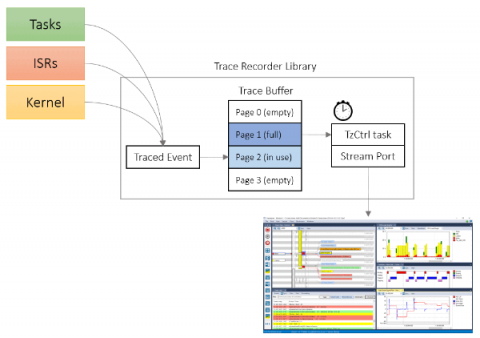
When debugging an RTOS-based system, tracing can often give a better understanding of the real-time behavior of your system. Percepio Tracealyzer supports two main types of RTOS tracing, snapshot and streaming, both offering the same powerful visualization although streaming allows for collecting longer traces. The Percepio trace recorder offers several options to allow developers to adjust the tracing setup to fit their target system and their analysis needs.
The DNS is the most critical part of network infrastructure and the only doorway to the internet. We at ManageEngine, a division of Zoho Corp, understand this criticality well and have carefully designed software that helps IT infrastructure management professionals securely manage their domains’ DNS records and elude modern problems in DNS management. We’re excited to introduce ManageEngine CloudDNS, the first critical infrastructure management software in our portfolio.
Wondering what the best way for employees to work more efficiently is? According to a Gallup poll, an engaged and productive workforce can increase corporate profits by as much as 21%. With the talent competition only increasing, every company’s IT and business leaders need to consider implementing workplace productivity strategies. In this article, we share tips for optimizing productivity levels for a modern workforce and exploring new ways of measuring it daily.
Service automation is the process of automating processes, events, tasks, and business functions. It offers multidimensional visibility of the business, which helps you streamline the business process. It integrates the domain functionality tools with various layers of automation within a unified interface or workflows.
Workday is a cloud-native solution for enterprise management. With its multitenant architecture, which supports a wide range of integrations and enables centralized administration of multiple Workday instances (i.e., tenants), Workday provides a unitary framework for managing human resources, financials, payroll, recruiting, analytics, and more. Along with Workday’s cloud-based delivery model, this multifaceted support offers flexibility that can be critical at enterprise scale.
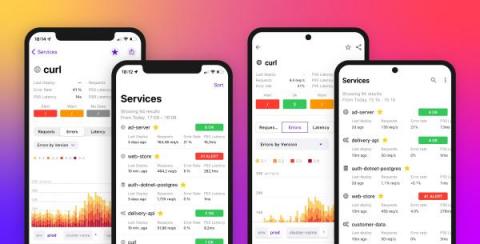
When you’re on-call for a critical service and get alerted to an issue that could impact customers, you need quick access to key performance metrics in order to effectively troubleshoot. But all too often, digging into this data requires you to switch from your mobile device to a laptop, restricting your ability to troubleshoot on the go and disrupting your routine.
Spending two decades in the middleware field has given me deep insight into the evolution of this technology domain. I began my career as a software engineer in a platform group, building reusable components using technologies like object linking and embedding (OLE), the distributed component object model (DCOM) and common object request broker architecture (CORBA).