Operations | Monitoring | ITSM | DevOps | Cloud

How to Stream AWS CloudWatch Metrics into Grafana Cloud (10× Cheaper + Near Real-Time)

Unlock faster, cheaper, and more reliable AWS observability with CloudWatch Metric Streams in Grafana Cloud. In this video, Tristan from Grafana Labs gives a full walkthrough of our new AWS Metric Streaming integration, showing how to stream CloudWatch metrics directly into Grafana Cloud using Amazon Data Firehose and Terraform.

How to Monitor Unmanaged Networks & Remote Workers

Your remote developer can't access the VPN. Is it his home router? His ISP? Your network? You have no idea and no way to find out. This is the reality of modern IT. Your network doesn't end at your office perimeter. It extends into hundreds of homes, coffee shops, branch offices, and third-party locations you'll never set foot in. And when performance tanks, you're troubleshooting blind.

How Log Management and NDR Work Together to Speed Up Incident Response

Log management and Network Detection and Response (NDR) solutions are closely related but offer different layers of visibility. Rather than overlapping, they complement each other, together providing a connected view of what’s happening in your environment. How exactly? Let’s take a closer look.

Introducing Dataspaces & Datasets

Observability data has a habit of outgrowing everything else. As telemetry volume, variety, and velocity increases, staying organized gets harder. Governance becomes messy, and the cost of digging through “everything” keeps rising. Over the past year, Coralogix’s DataPrime engine has been addressing these challenges by laying a new foundation for observability at scale.

Detecting Anomalous Spans at Scale with DataPrime

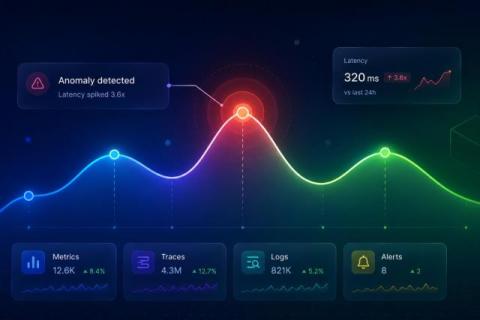
Tracing is one of the most transformative gifts of observability. It allows engineers to follow a single request through a distributed system and see every span and dependency along the way. However, even with that visibility, some of our most basic questions stay unanswered. Why did a specific span behave differently today than it did yesterday? Why did latency rise even when nothing “broke”?

Advantages of Routing Security Data Where it Has the Most Value

Enterprise data volumes are doubling every two years, but security and observability budgets remain mostly flat (or in the worst-case scenario, are declining). As teams struggle to keep up, the challenge isn’t just the amount of data, it’s the inefficiency of how that data is collected, processed, and routed. Most organizations rely on a patchwork of agents, forwarders, and legacy collectors like Syslog to ingest telemetry from across the environment.

The Silent Sabotage of Configuration Drift

Your network is not a static entity. It is a living system that has been running for years, absorbing countless changes. While your infrastructure may appear healthy on the surface, a slow and silent saboteur is often at work, methodically undermining your infrastructure from within. This is not the work of a malicious actor. It’s the inevitable result of a process you may not even be tracking: configuration drift.

Turn feedback into action across your engineering org with Datadog Forms

Engineering teams rely on forms for everything from approvals to checklists, yet the process usually lives outside engineering operations. Spreadsheets, one-off surveys, and external form builders capture inputs, but they create scattered data, slow follow-ups, and manual translation into actionable work. Datadog Forms enables teams to create and share interactive forms directly within Datadog.