Operations | Monitoring | ITSM | DevOps | Cloud

Kubernetes Master Class: How to Secure Production Kubernetes and Service Mesh Workloads on Rancher

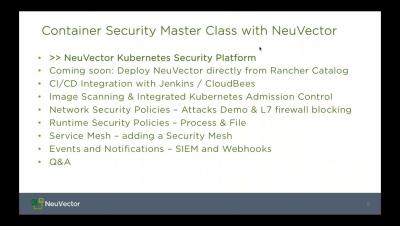
As more container deployments move into production there will be an increasing level of attacks on application containers and the orchestration tools to manage them. The success of Kubernetes has been a major enabler for the “service mesh” concept to become a reality, as a “sidecar” container is the ideal form-factor for service mesh functions to be placed together with the service itself. The important thing to remember is that, although a service mesh has security features, it is NOT a security solution. It is not designed to provide the type of network, endpoint and host security required for defense in depth.
ManageEngine recognized as a May 2019 Gartner Peer Insights Customers' Choice for Network Performance Monitoring and Diagnostics Software

2019 continues to be a great year for ManageEngine accolades. This time, we are proud to announce that we’ve been named a May 2019 Gartner Peer Insights Customers’ Choice for Network Performance Monitoring and Diagnostics Software. The consistent performance of our network performance monitoring (NPM) solutions—OpManager, NetFlow Analyzer, and Network Configuration Manager—has been the driving force behind this recognition.

Better Together: DX AIOps and Intelligent Automation

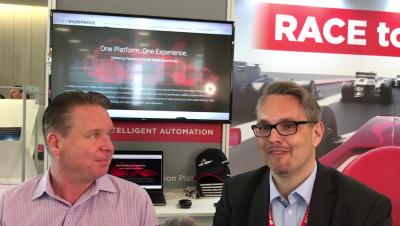
Organizations are rapidly adopting AI first strategies to power digital business models. Hear Broadcom executives Kieran Taylor and Ralf Paschen share our approach for AI-driven automation for the digital business. In this video, you'll learn why having intelligent automation aligned to AIOps enables the promises of delivering AI-driven digital experiences.

Stop Focusing on Time to First Byte and Do This Instead

Metrics are the lifeblood of every data-driven decision. Question after question on forums like Reddit, Stack Overflow and other IT communities ask which metrics teams should focus on for improving website speed and end-user experience. There’s a push in web development circles to focus on Time to First Byte (TTFB) to measure and improve website speed. But every viewpoint has its opposition.

Containerized Air Gapped Edge Platform Architecture

An emerging use case for containerized platforms has been the ability to deploy applications in what is termed as an air-gapped deployment. This deployment pattern is particularly pronounced around edge computing (more on that later in the blog series) – though there exist significant differences between edge clusters and air-gapped deployments. Air-gapped applications are those that run isolated from datacenter or internet connectivity.

Tigera adds eBPF support to Calico

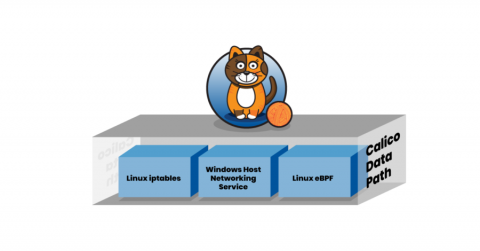
Calico provides users flexibility by detecting and choosing the right tool for the right job. One of our core values at Tigera is Our customer is the hero of our story. We consider the OpenSource users of Project Calico our customers and we intently listen to their needs to continuously deliver new capabilities and enhanced performance.

Open Banking, Fintech Disruption, And Other Trends In Financial Services IT

The accelerating pace of technological change is the most disruptive force affecting the financial services industry today, with fintech disruptors making significant headway across every segment across the sector—including banking, payments, lending, insurance, and trading.

How to Empower DevOps to Make Better Cloud Cost Decisions

When it comes to cloud strategy, companies rank “cutting costs” as their top priority for 2019, according to a recent Datamation survey. That’s not to say that they plan to cut back on cloud spending in general; in fact, those budgets are very much expected to grow. Rather, companies are looking for ways to reduce unnecessary costs and optimize cloud spend.

Toward a Maturity Model for Observability

Access to observability is becoming critical to organizations shipping software, running modern infrastructures in production, and to understanding how users are experiencing their service. To achieve success in delivering a complex service, it’s no longer optional to instrument for real visibility and ease of troubleshooting, to optimize alerting to enable a focused response, to do what is needed to drive toward real understanding and ownership of the code we deliver.