Operations | Monitoring | ITSM | DevOps | Cloud

Enterprise AI governance framework: A practical guide to governing AI

AI adoption is accelerating across enterprises, but governance isn't necessarily keeping pace. As AI becomes part of everyday business workflows and applications, organizations need to understand where it is being used, what data it can access, and who is responsible for managing the risks. ManageEngine's shadow AI researchhighlights this challenge.

Understand the top paths users take to convert or drop off with Journey Paths

A funnel can tell you that 40% of users dropped off between checkout and payment. What it can’t tell you is what those users did instead, such as return to an earlier form field, leave the flow for a support page, encounter an error, or take another route entirely. Because actions and views between funnel steps don’t affect the conversion calculation, two very different experiences can produce the same funnel result.

Tame the data chaos with Sumo Logic's Data Pipelines

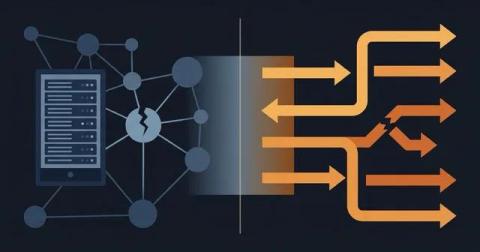
Security and operations teams are collecting more telemetry than ever, and AI is accelerating that curve. IDC projects the world will generate 393.9 zettabytes of data in 2028, up from 149 zettabytes in 2024, with AI and machine learning workloads driving much of that growth. That growth forces a hard trade-off. Ingest everything, and you pay for it. Filter aggressively, and you risk missing the signal that matters.

AppSignal Intelligence Just Got More Rails Context

Today we’re taking our partnership with Chris Oliver (founder of Hatchbox and GoRails) one step further. With AppSignal, you can already store enriched telemetry about your applications, services, and infrastructure, along with your user context, in your AppSignal context store. You can use that context store for traditional observability reporting and workflows, or connect it to your agents over MCP or the CLI. AppSignal’s context store is what our Intelligence features are built on.

How Does Google Photos Work to Back Up and Sync My Files?

Google Photos is part of Google’s product suite, but works differently from Google Drive, which focuses on storing your files and collaboration with others. So how does Google Photos work? Google Photos is dedicated to protecting your photos from accidental deletion or data loss by automatically uploading your photos to Google Photos, backing them up in the cloud, and making them accessible across all devices.

Predictable Cloud Egress Is Finally Here: How Megaport Unlocks It All

Discover how AWS Direct Connect flat-rate pricing makes cloud egress predictable and how Megaport enables high-volume data migration. AWS has announced flat-rate pricing for Direct Connect, bringing more predictable egress costs to eligible 10 Gbps and 100 Gbps Dedicated Connections. Here’s what the new egress pricing model means for bulk data migration, plus how Megaport helps you make the most of it with private connectivity to the storage and compute your workloads need.