Synthetic Monitoring in Cloud Monitoring is now Generally Available
Synthetic monitoring in Cloud Monitoring tests the availability, consistency, and performance of a web application from a real user’s perspective.


Synthetic monitoring in Cloud Monitoring tests the availability, consistency, and performance of a web application from a real user’s perspective.
As a developer, when I first stepped into the wonderful world Kubernetes, I was amazed at the endless configuration possibilities it offered for containerized apps. It felt like I was handed the most multifaceted tool for all my deployment needs.
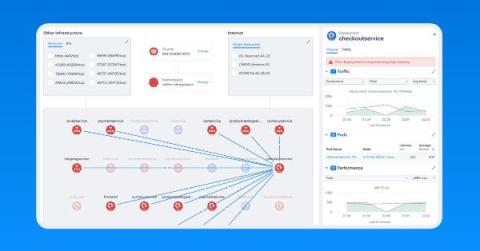
Kentik Kube provides network insight into Kubernetes workloads, revealing K8s traffic routes through an organization’s data centers, clouds, and the internet.
The Information Technology Infrastructure Library (ITIL) is a customer-centric framework that promotes governance, collaboration, and continuous improvement. At a time when IT service management (ITSM) is changing with new technology, shifting regulatory requirements, and decentralized teams, this is vital. We explored how the ITIL 4 service value system helps ITSM service providers generate business value through the creation, delivery, and continuous improvement of services.
The European Commission has introduced the Digital Operational Resilience Act (DORA) to bolster the digital infrastructure of the financial sector within the European Union (EU). As part of the EU's wider digital finance strategy, DORA's objective is to create a comprehensive framework governing digital operational resilience. Financial institutions must ensure full compliance with DORA by January 2025.
The word "cache" is used in many different contexts. Typically, a cache is a small chunk of data stored locally for quick access. In this case, it’s about computer caches, i.e., the data stored in memory. Micro-caching is a technique where a programmer uses this cached data to do some quick computations, which can lead to some amazing solutions. In micro caching, dynamically generated content is cached for only a brief period rather than full-page caching.