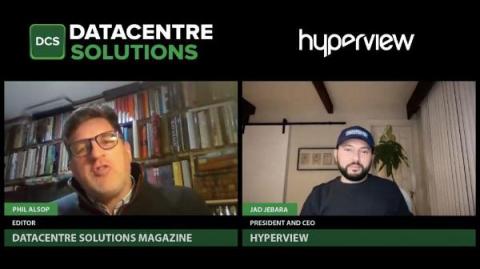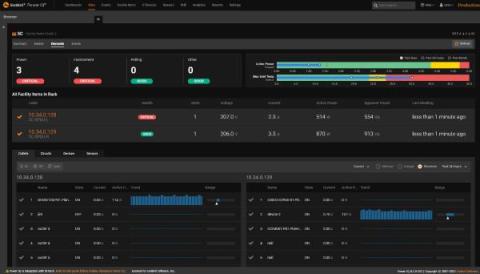
Our CEO, Jad Jebara joins Digitalisation World podcast to provide insights as to how the data center industry, prompted by the requirement for meaningful environmental reporting, can work towards a truly sustainable future by focusing on the metrics that matter. See first-hand how modern DCIM software is being used to manage hybrid IT environments. Schedule a free one-on-one demo of Hyperview today.
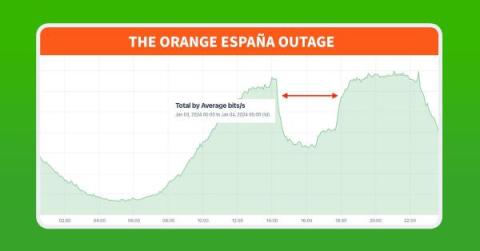
Orange España, Spain’s second largest mobile operator, suffered a major outage on January 3, 2024. The outage was unprecedented due to the use of RPKI, a mechanism designed to protect internet routing security, as a tool for denial of service. In this post, we dig into the outage and the unique manipulation of RPKI.
Like everyone else in the world, we are thinking hard about how we can harness the power of AI and machine learning while also staying true to our core values around respecting the security and privacy of our users’ data. If you use Sentry, you might have seen our “Suggested Fix” button which uses GPT-3.5 to try to explain and resolve a problem. We have additional ideas being developed as well that we’re excited to preview.
In Java applications, concurrency issues can be difficult to reproduce and debug. Because work is scheduled nondeterministically across threads, the conditions that have led to an error in one execution of the program may not trigger the same issue the next time around. Exceptions that are silently handled—also known as swallowed exceptions—can also be challenging to debug because they typically do not leave any trace in the logs.
As data centers grow more complex and power-hungry, rack PDUs are an increasingly important component of data center power circuits. Modern intelligent rack PDUs have many advanced features and work seamlessly with Data Center Infrastructure Management (DCIM) software to provide a complete solution for monitoring and managing data center infrastructure. Let’s delve into the key trends shaping rack PDU management in 2024 and beyond.
There’s a rising and intensifying pressure on financial services institutions that aligns with the demand for modernization, down to the core. It comes from laws like those of the Service Organization Control Type 2 (SOC 2) and the General Data Protection Regulation (GDRP), which enforce the need to build and hold down cybersecurity policies.
C-suiter, VP’er, or anyone who’s top of the pile in an enterprise faces inherent pressure that comes part and parcel with the role that they’re taking on. Many of the pressures can’t be overcome, it’s simply the nature of the beast. But dealing with technical issues in their day-to-day life is one of their biggest gripes, because it always feels like a problem that should be solved – not one needing to be dealt with again and again.
For this week’s installment of “The concise guide to Loki,” I’d like to focus on an interesting topic in Grafana Loki’s history: ingesting out-of-order logs. Those who’ve been with the project a while may remember a time when Loki would reject any logs that were older than a log line it had already received. It was certainly a nice simplification to Loki’s internals, but it was also a big inconvenience for a lot of real world use cases.