The widespread adoption of mobile apps is driving workforce productivity from almost anywhere across nearly every industry. Workers are relying on mobile technologies more than ever to get their work done every day—from short-staffed nurses who need to update information on the go to field service technicians who need to complete tasks and access critical information in real time to desk workers who need visibility into communications and company resources from anywhere.
I don’t care about religious wars over “which logger is the best”. They all have their issues. Having said that, the worst logger is probably the one built “in-house”… So yes, they suck, but re-inventing the wheel is probably far worse. Let’s discuss making these loggers suck less with proper usage guidelines that range from the obvious to subtle. Hopefully, you can use this post as the basis of your company’s standard for logging best practices.
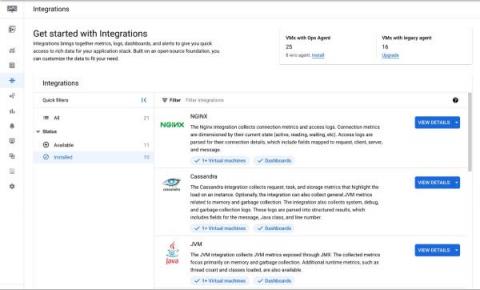
When IT operators and architects begin their journey with Google Cloud, Day 0 observability needs tend to focus on infrastructure and aim to address questions about resource needs, a plan for scaling, and similar considerations. During this phase, developers and DevOps engineers also make a plan for how to get deep observability into the performance of third-party and open-source applications running on their Compute Engine VMs.
Let’s face it. Incidents can be expensive—really expensive. But the high cost of incidents within a production environment isn’t always due to a compromised service or negative customer experience.
I recently had a wonderful opportunity to contribute to the Computer Weekly Developer Network (CWDN) ultimate series on “Infrastructure as Code” that collected articles and overviews from vendors and experts operating in the IaC space to form a formidable reference on all aspects of IaC. My contributions were to offer some insight into our architecture that has been designed to monitor infrastructure that has been deployed as code automatically and without tedious manual configuration.