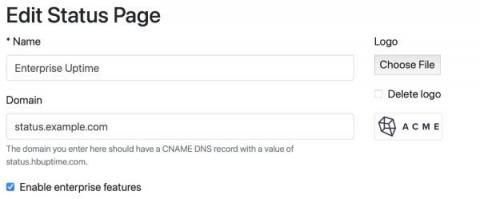
Enterprise features for Public Status Pages!
While a public status page *does* foster transparency and trust with users, sometimes you just need to save face. And hey, you're a tech behemoth—you can get away with it.


While a public status page *does* foster transparency and trust with users, sometimes you just need to save face. And hey, you're a tech behemoth—you can get away with it.
For the second year in a row, we have published a pandemic-era DevOps Salary Report. It’s no surprise that the pandemic catapulted every type of company into a digital transformation frenzy. We have done our best to distinguish between temporary shifts and long-term trends dictated by a newly hyper-digital world. In 2021, we are grappling not only with the reality of the pandemic, but with the Great Resignation – at least in the U.S.
It has been seen several times that. When a customer raises an issue. Several technicians are working on the same problem. As a result, duplication of work occurs, and efficiency suffers. To avoid this type of problem, help where software is utilized. As it keeps updating the status in real-time and provides each problem with a unique identity number. Whenever the technician works on the same problem it alerts the member that the other technician is looking into it.
Some would say, it’s “just” a release. We say it’s revolutionary. Never seen before. One of a kind. Exceptional. Why, you wonder? Because we have reinvented monitoring.