Operations | Monitoring | ITSM | DevOps | Cloud

The latest News and Information on AIOps, alerting in complex systems and related technologies.

Seven Straight Years of Verified Customer Trust

Seven years ago, our customers started telling the world what the ScienceLogic AI Platform does for their operations. They haven’t stopped. For the seventh consecutive year, that steady stream of verified customer reviews has earned the ScienceLogic AI Platform a TrustRadius Top Rated award, again. Seven years in a row shows that customers keep choosing to share their experience because the platform keeps delivering value. This recognition doesn’t come from us.

What Is Enterprise Service Management (ESM)? Explained

Enterprise service management (ESM) applies the proven model of IT service management, catalogs, workflows, self-service, and SLAs, to the whole business: HR, facilities, finance, and more. Here is what it is and how it works. What is enterprise service management, and how is it different from ITSM? In this explainer we define ESM, show how it works across departments, clarify how it builds on IT service management, and cover the mistake most teams make: copying IT ticket forms instead of orchestrating work across teams.

Incident Prevention & Incident Assistant Demo - The best incident is one that never happens

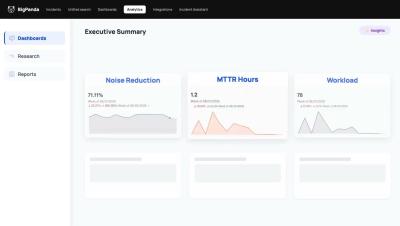
The best incident is one that never happens. The BigPanda team recorded a live demo of the AI Incident Prevention & AI Incident Assistant as part of ITSM Week, hosted by the Service Desk Institute. ITSM teams are measured by how effectively they prevent disruption. Yet many teams still spend too much time reacting to noisy, low-context incidents after impact has already begun. Watch this on-demand session to learn how leading organizations are moving beyond manual firefighting to autonomous operations with Agentic AI.

Turning Disconnected Alerts into Actionable Insights

The previous post in this series focused on shared context and why hybrid operations depend on a connected view across cloud, network, and infrastructure. Once that context is in place, the operational benefits become easier to see—especially during incident response, where signal volume and fragmented tooling can slow teams down. Alert noise remains one of the most persistent challenges in hybrid environments. Every layer of the stack can generate its own warnings, anomalies, and service events.

AI Agent Governance: The Missing Piece of Autonomous IT

AI agents are making decisions, accessing systems, and resolving issues autonomously. But as organizations deploy more agents, one challenge becomes impossible to ignore: governance. Who has access? What changed? Who is accountable? The future of Autonomous IT requires autonomy with accountability.

Improving Digital Employee Experience with Intelligent Automation | Reduce IT Tickets by 70%

Are your employees still waiting hours or days for IT issues to be resolved? Many organizations have invested heavily in ITSM platforms, self-service portals, and chatbots. Yet service desks continue to struggle with growing ticket volumes, rising costs, slow resolution times, and poor digital employee experiences. In this webinar, Resolve and Redington explore why traditional service management approaches often stop at ticket creation instead of ticket resolution, and how intelligent automation is helping enterprises move toward a Zero Ticket IT model.

How IT Teams Can Start Their AI Automation Journey | Agentic AI, ITSM & Zero Ticket IT

How should IT leaders approach automation and AI? Where should they start, and how can they drive measurable results without getting caught up in the hype? In this episode of Agents of IT, Fran Fernandez and Zach Austin sit down with Chris Ellis, Senior Technology Solutions Specialist at RICOne, to discuss practical IT automation strategies, agentic AI, service desk transformation, and the journey toward autonomous operations.

What Enterprise AI Gets Wrong About Usage

AI is moving out of the experimental phase and into the everyday rhythm of work. Teams are no longer using it occasionally for novelty or quick wins, but instead are exploring more robust use cases to investigate issues, answer questions faster, surface context, and help them move through complex workflows with more confidence. That’s the shift that most organizations’ leadership teams have been asking for.

Why Modern Enterprises Still Get Blindsided And How Business Process Observability Changes That

Traditional observability misses business failures Modern monitoring tools can show that systems are technically healthy while critical business outcomes are quietly failing. Business Process Observability (BPO) closes this gap by tracking entire business transactions, like orders, payments, and shipments, instead of just infrastructure and application metrics.