The latest News and Information on AIOps, alerting in complex systems and related technologies.
Taking economics into account Most enterprises consider economics when deciding which AIOps platform to purchase. Often, their conception of economics is narrow, reduced to the resolution of three issues: 1) the cost of the technology; 2) its ability to replace human labor; and 3) its ability to displace deployed products and, hence, defray future maintenance and subscription charges. In other words, AIOps economics becomes almost entirely a matter of cost.
ServiceNow® is facing one of the biggest opportunities to date: developing a self-healing IT environment that makes proactive IT support a reality. Although the concept of self-healing has been around for at least a decade, the ability to achieve it has fallen short. A lack of system intelligence stopped us from predicting and preventing many issues without human intervention somewhere in the process. AI technology is changing that paradigm.
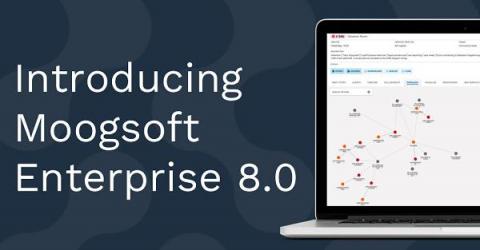
Moogsoft Enterprise consolidates visibility and control of monitoring tools to help entire IT Ops and DevOps teams reduce noise, prioritize incidents, reduce escalations and ensure uptime. Working from anywhere, users can easily find and resolve the root cause of incidents before they become outages.
Today, the customer experience drives IT on all levels. In our digitally transformed world, we do everything online — transact, interact, purchase and more. This mandates constant change and zero downtime. Ironically, as enterprises adopt IT innovations, IT environments get harder to manage and impact the productivity and agility of DevOps and SRE teams — and as a result, the customer experience suffers.
DevOps has become the go-to-approach for IT to accelerate their ability to achieve business requirements and ensure the quality of the customer experience. Today’s economy and the customer experience drives IT across the entire stack. Our world has become digitally dependent, which mandates an ever-evolving IT environment that’s on-demand and always available.
By abruptly forcing most people to work from home, and by triggering an economic crisis, the global pandemic has upended business operations. Not only must business leaders facilitate remote work among their employees, but they must also accommodate new ways of interacting with suppliers, partners and customers. Meanwhile, businesses’ digital channels and infrastructure, already critical prior to the crisis, have become even more essential, and yet harder to monitor and manage.