The renowned German manufacturing magazine “Factory Innovation” recently conducted a comprehensive practical test on four leading alarm notification software for industrial manufacturing in their latest issue (01/23). The four alarming systems that were evaluated include: the Alarm Control Center from Alarm IT Factory (a spin-off of Siemens AG), ALERT 4.0 from Micromedia, the Alarm and Information Portal (AIP) from VIDEC, and SIGNL4 from Derdack.
In the modern workplace, more and more organizations are relying on tools like Microsoft Teams to stay connected and productive. However, with the rising usage of these tools comes the potential for technical difficulties that can impact call quality and overall performance. This can be frustrating for teams trying to get work done, but there are ways to stay on top of these challenges.
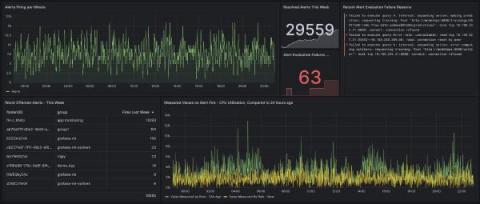
Grafana Alerting enables users to create and customize alert rules as separate entities and link them to Grafana panels. It also supports various data sources with built-in alerting engines, such as Prometheus, Grafana Mimir, and Grafana Loki, allowing users to manage their alert rules directly from Grafana’s UI.
After a longer period without a major update, our April 2023 update has it in for it – promised!
I see it daily in my role, IT organizations are paying for best-of-breed monitoring tools but struggle to tie the pieces together between these siloed systems. The wound of these silos is further punctured when incidents arise. Incidents are costly for so many reasons, like wasted company resources, potential revenue loss, customer satisfaction, employee burnout, etc. This is exactly why BigPanda exists, to apply AI to the complex problems IT operations, NOC, SRE, and DevOps teams face daily.
We often see questions about how to template alerts. In Grafana, you can template information about your alerts with custom labels and annotations, and you can also template how notifications look and what information they contain with notification templates. Many users confuse the two, despite being separate features with different use cases.
When it comes to time-sensitive events, instant, reliable communication is key. In the past, pagers were relied on for quick communications as they allowed people to communicate on the go and without access to a landline. But today, the availability of cellphones has made the portability of communication devices a standard feature, and communication technology has advanced significantly, begging the question – What is the use for pagers today?