Operations | Monitoring | ITSM | DevOps | Cloud

The latest News and Information on Cloud monitoring, security and related technologies.

Azure MP part 3: Using it with SquaredUp

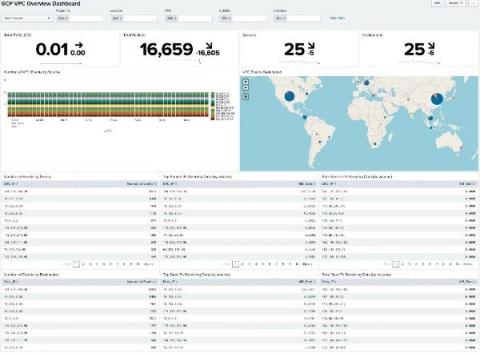
Now that we have configured the monitoring for a couple of Service types, we should have some data flowing in. The only thing that’s left now is to display this data in dashboards, so it makes sense to us. In this blog let’s talk about displaying in data in SquaredUp. Since its coming from a Management Pack like any other data, it is actually pretty much the same as treating any other Management Pack in SCOM, with different classes.

Best practices for your cloud monitoring strategy

With the advent of cloud technologies, there has been a major shift in the way organizations handle infrastructure operations and service delivery. The increasing shift towards cloud-based and hybrid cloud ecosystems for business operations has made it necessary for organizations to employ cloud monitoring tools that monitor the performance and efficiency of these cloud-hosted services.

Azure Kubernetes Service: How to create a cluster

Azure Kubernetes Service, Microsoft's managed Kubernetes solution, allows you to quickly create a Kubernetes cluster in Microsoft Azure and provides features to help you manage and maintain your Kubernetes cluster in Azure. In this blog post we will go over some of the features of AKS and then walk through creating an AKS cluster.

How to Debug Slow Lambda Response Times

When you build your application on top of Lambda, AWS automatically scales the number of “workers” (think containers) running your code based on traffic. And by default, your functions are deployed to three Availability Zones (AZs). This gives you a lot of scalability and redundancy out of the box. When it comes to API functions, every user request is processed by a separate worker. So the API-level concurrency is now handled by the platform.

What is AWS Amplify?

Amazon Web Services is the world’s biggest cloud platform, and businesses of all shapes and sizes use it every day to run their businesses. You may find this surprising, but AWS accounts for more than half of Amazon's operating income. Thus, Amazon has a vested interest in getting as many people to use AWS as possible, so it offers a whole bunch of tools to make it easy to use. AWS Amplify is one of these.

Hybrid Cloud Monitoring: Take It to Twitter

If you’ve run across other articles I’ve written about hybrid cloud, you’ll notice a familiar theme: it’s an artifact of other technology decisions nobody asked for. As such, it’s left up to IT operations to figure out how to know if it’s working well, cost-effectively, or as expected in the first place. However, tools are improving rapidly, and IT teams are gaining skill with the model and technologies.

The Ultimate Guide to Monitoring Serverless Applications

Serverless applications, more often than not, have logic distributed over multiple functions and services, which with growth and agents and wrappers attached, can get more complex and costly. This is where Serverless monitoring comes in to help. But what is Serverless monitoring? Serverless monitoring allows developers to gain important insight on what happens during each execution and event, errors become more easily visible and measuring resource consumption for each invocation is possible.

Mitigating the Risks of Instance Metadata in AWS EKS

Compromising a pod in a Kubernetes cluster can have disastrous consequences on resources in an AWS Elastic Kubernetes Service (EKS) account if access to the Instance Metadata service is not explicitly blocked. The Instance Metadata service is an AWS API listening on a link-local IP address. Only accessible from EC2 instances, it enables the retrieval of metadata that is used to configure or manage an instance.

How to Avoid SLA-Killing, Budget-Busting Cloud Performance Problems

There are lots of excellent reasons to move applications into the public cloud. But those benefits cannot come at the expense (pun intended) of performance. Your SLAs, whether explicitly stated and written into contracts or implicitly promised through your commitment to quality, are part of your brand. Falling short is costly. Even if you don’t have to pay penalty fees, your reputation and customer loyalty can take a hit.