Operations | Monitoring | ITSM | DevOps | Cloud

The latest News and Information on Containers, Kubernetes, Docker and related technologies.

Application Discovery Tutorial

Systems and platforms continue to grow more complex and distributed. The march towards distributed microservices has been accelerated with Kubernetes; arm yourself with a Kubernetes manifest and up your replica count and like magic, you have more than one endpoint for your workload. In the Kubernetes ecosystem, there has been a lot of investment on the infrastructure side of the house for example in making sure clusters are performant and have the ability to scale.

Bare metal Kubernetes hands on tutorial with MAAS and Juju

In this video tutorial, you will go hands-on and build your own simulated bare metal Kubernetes cluster using just a single computer 💻 with Anton Smith, product manager for MAAS. Along the way, you’ll get to use and learn about some Linux networking, MAAS, LXD, Ceph, Juju and Kubernetes, and at the end deploy an application to your new K8s cluster ✨.

Kubernetes 1.23 - What's new?

Kubernetes 1.23 is about to be released, and it comes packed with novelties! Where do we begin? This release brings 45 enhancements, on par with the 56 in Kubernetes 1.22 and the 50 in Kubernetes 1.21. Of those 45 enhancements, 11 are graduating to Stable, a whopping 15 are existing features that keep improving, and 19 are completely new. The new features included in this version are generally small, but really welcomed. Like the kubectl events command, support for OpenAPI v3, or gRPC probes.

New Ideas On How To Install Epinio

Epinio, the application development engine for Kubernetes, is meant to take you from app to URL in one step. It does that by either applying buildpacks to your app or using a pre-built docker image. Epinio installs into any Kubernetes cluster to bring your application from source code to deployment and allow for developers and operators to work better together.

A Developer focused CI/CD pipeline for Kubernetes

As Kubernetes becomes the key target environment across many organizations, it automatically becomes an essential topic for developers. However, Kubernetes was created for operations and, unless you spend a considerable amount of time learning and specializing yourself, it is still challenging to use. Developers should rather focus on delivering applications instead, and a developer or application-focused platform is needed to enable that.

Introduction to Kubernetes

From Raspberry Pis to satellites in space, Kubernetes continues to be the lifeblood of the cloud-native landscape and is a fast-moving train increasing in both popularity and demand, among businesses and developers. As a result, K8s has experienced rapid adoption and progressive development as an ecosystem. But what exactly is Kubernetes and why is it so popular? Even more, what are the necessary basics for someone to get started with K8s?

How Qovery Community plan works

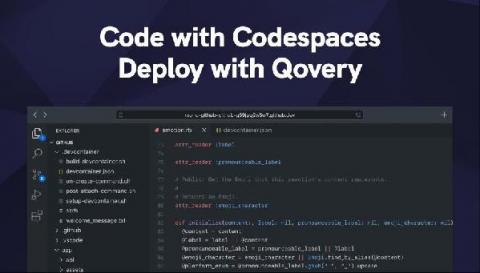
Since we launched Qovery in January 2020, we offered free hosting ("Community" plan) for every developer. Providing free hosting was the perfect way to get product feedback and iterate with our users without the cost constraint. As our hosting infrastructure costs have drastically grown within the last 18 months, we had to reinvent our free offer. In a nutshell, we will continue to offer free hosting to involved community members only. Keep reading to know more 👇

Kubernetes Master Class GitOps and Fleet Multi Cluster CD with EKS, GKE and AKS

GitOps is a relatively new model with a fast adoption rate because of how it enhances the continuous delivery workflow in the Kubernetes context. GitOps requires you to describe and observe systems with declarative configurations that will form the basis of continuous integration, continuous delivery and continuous deployment of your infrastructure. In this session, we will focus on making use of Fleet to manage deployments to multiple downstream clusters at scale.