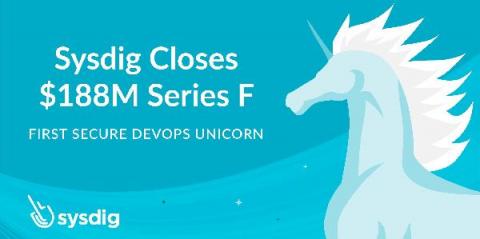
Sysdig Raises $188M at a Valuation of $1.19B to Secure Modern Cloud Applications
Funding follows accelerating growth and open source community momentum, and positions Sysdig to emerge as the leader in container and cloud security.


The latest News and Information on Containers, Kubernetes, Docker and related technologies.
The CVE-2021-25735 medium-level vulnerability has been found in Kubernetes kube-apiserver that could bypass a Validating Admission Webhook and allow unauthorised node updates. The kube-apiserver affected are: You are only affected by this vulnerability if both of the following conditions are valid: By exploiting the vulnerability, adversaries could bypass the Validating Admission Webhook checks and allow update actions on Kubernetes nodes.
Today, I am excited to share that we secured $188M in a new funding round, at a valuation of $1.19B (read more here). At the outset, I want to thank our employees, partners, investors and most importantly, our customers for this important milestone. The funding follows a year of unmatched innovation that led to accelerated revenue growth, installed base growth, and rapid community adoption of our open source projects.
As applications move from monolithic architectures to microservices-based architectures, DevOps and Site Reliability Engineering (SRE) teams face new operational challenges. Microservices are updated constantly with new features and resource managers/schedulers (like Kubernetes and GKE) can add/remove containers in response to changing workloads. The old way of creating alerts based on learned behaviors of your monolithic applications will not work with microservices applications.
One of the greatest strengths of containers is the ability to spin more of them up quickly. As the volume of traffic to your application increases, you can create more application containers on the fly to handle it, in almost no time at all. Kubernetes ships with autoscaling baked in, giving you the power to scale out when the system detects an increase in traffic—automatically!
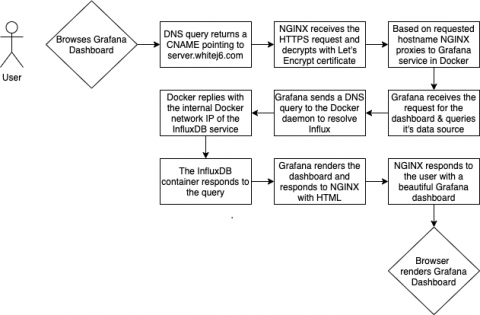
Docker is a power tool for deploying applications or services, and there are numerous Docker orchestration tools available that can help to simplify the management of the deployed containers. But what if you are wanting to deploy a small number of services and not wanting to undertake setting up and managing another application stack just to run a handful of containers. I will cover how I deployed a handful of services on a single Docker host.
When building distributed, scalable cloud-native apps containing dozens or even hundreds of microservices, you need reliable monitoring and alerting. If you’re monitoring cloud-native apps in 2021, there’s a good chance you’ve chosen Prometheus. Prometheus is an excellent choice for monitoring containerized microservices and the infrastructure that runs them — often Kubernetes.
You probably can’t believe I’m asking that question. It’s like showing up to a party and immediately asking about the afterparty. Is it really time to look for the exit? No…but yes. We used to deploy apps on systems in data centers. Then we moved the systems to the cloud. Then we moved the apps to containers. Then we wrapped it all in Kubernetes for orchestration, and here we are. Each advance in technology unlocks doors we couldn’t reach before.
Large portions of software development budgets are dedicated for testing code. A new component may take weeks to thoroughly test, and even then mistakes happen. If you consider software defects as security issues then the concern goes well beyond an application temporarily crashing. Although even minor bugs can cost companies a lot of time to locate the bug, resolve it, retest it in lower environments, then deploy it back to production.