Operations | Monitoring | ITSM | DevOps | Cloud

The latest News and Information on Containers, Kubernetes, Docker and related technologies.

Kubernetes monitoring and troubleshooting made simple

Infrastructure monitoring was difficult enough when entire businesses ran off a few bare metal servers in a dusty, forgotten closet. Other IT infrastructure monitoring tools fell short, unable to provide complete and granular-enough metrics in real time, even when we were only dealing with a handful of systems responsible for running every part of the application stack.

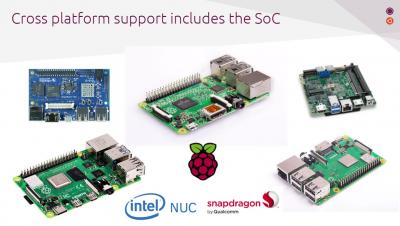
Highly available Kubernetes in IoT: MicroK8s on RaspberryPi

Learn how to set up a Pi-Hole instance with a single command and a cluster of Raspberry Pis on MicroK8s. High availability, load balancing and Kubernetes configuration included. The Raspberry Pi 4 brings the graphics, RAM and connectivity needed for a Linux workstation, so why not use a cluster to set up your own Pi-Hole, the open source network-level ad blocker that acts as a DNS sinkhole or DHCP server.
AWS Fargate runtime security - Implementing File Integrity Monitoring with Sysdig

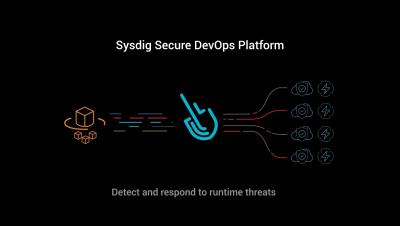
Thanks to serverless you can focus on your apps, instead of your infrastructure. Take AWS Fargate as an example. A service where you can deploy containers as Tasks, without worrying what physical machine they run on. However, without access to the host How can you detect suspicious activity? Like, file changes on your Fargate tasks? Sysdig provides runtime detection and response to secure Fargate serverless containers.

Datadog Live Containers - Kubernetes Resources

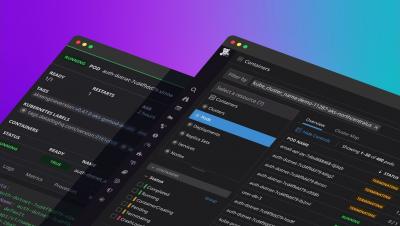
Datadog Live Containers provides multidimensional, real-time visibility into Kubernetes workloads, from Deployments and ReplicaSets down to individual Containers. Using Datadog's curated metrics, teams can track the health and performance of their Kubernetes resources in the appropriate context and surface critical information about every layer of their Cluster.

Dynamic Service Graph | Tigera - Long

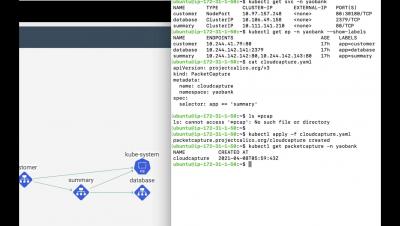
Downtime is expensive and applications are a challenge to troubleshoot across a dynamic, distributed environment consisting of Kubernetes clusters. While development teams and service owners typically understand the microservices they are deploying, it’s often difficult to get a complete, shared view of dependencies and how all the services are communicating with each other across a cluster. Limited observability makes it extremely difficult to troubleshoot end-to-end connectivity issues which can impact application deployment.

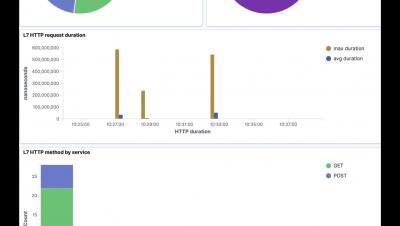
Application Layer Observability | Tigera - Long

The majority of operational problems inherent to deploying microservices in a distributed architecture are linked to two areas: networking and observability. At the application layer (Layer 7), the need to understand all aspects associated with service-to-service communication within the cluster becomes paramount. Service-to-service network traffic at this layer is often using HTTP. DevOps teams struggle with these questions: Where is monitoring needed? How can I understand the impact of issues and effectively troubleshoot? And how can I effectively protect application-layer data?

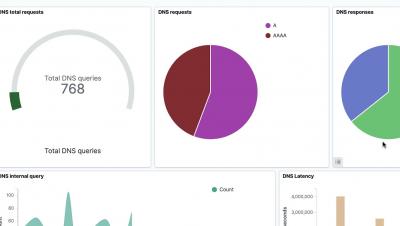
DNS Dashboard | Tigera - Long

While it’s an essential part of Kubernetes, DNS is also a common source of outages and issues in Kubernetes clusters. Debugging and troubleshooting DNS issues in Kubernetes environments is not a trivial task given the limited amount of information Kubernetes provides for DNS queries. The DNS Dashboard in Calico Enterprise and Calico CLoud helps Kubernetes teams more quickly confirm or eliminate DNS as the root cause for microservice and application connectivity issues.

Kubernetes: Weighing Advantages and Disadvantages

Kubernetes is one of the current leading technologies. Its adoption has seen tremendous growth in the past few years. The concept of containers is a paradigm that appears to be the predominant medium of software development and deployment in the coming future. Containers help maintain consistency across various platforms, as they pack an application with its dependencies to help move it from one platform to another.

Calico Enterprise enables live view of cloud-native apps deployed in Kubernetes

We are happy to announce that the latest release of Calico Enterprise delivers unprecedented levels of Kubernetes observability! Calico Enterprise 3.5 provides full-stack observability across the entire Kubernetes environment, from application layer to networking layer. With this new release, developers, DevOps, SREs, and platform owners get: For more information, see our official press release.