Operations | Monitoring | ITSM | DevOps | Cloud

The latest News and Information on Containers, Kubernetes, Docker and related technologies.

A guide for CTO: 8 questions to ask before using Kubernetes

Congratulations, you finally consider moving your apps to Kubernetes. It is a big day! Here is a checklist to ensure you did not forget anything essential to increase your chances of success using Kubernetes. We divided those points into three sections, from the most important to the least. Let’s go.

Replay Single Transactions for Root Cause Analysis

Speedscale was built primarily to provide engineering teams with better insight into their applications over time, replaying single transactions for root cause analysis that give developers and SREs confidence that tomorrow’s application code will work just as well in production as it did yesterday.

Monitor kube-state-metrics v2.0 with Datadog

In order to manage complex containerized applications, modern devops teams need to have deep visibility into the status of their Kubernetes resources. By listening directly to the Kubernetes API, the open source kube-state-metrics service generates key metrics about your Kubernetes objects, including pods, nodes, and deployments, which are essential for understanding the status and performance of your clusters.

Unravel the hidden mysteries of your cluster with the new Kubernetes Dashboards

One of the greatest challenges you may face when creating Kubernetes dashboards is getting the full picture of your cluster. Kubernetes is the de-facto standard for container orchestration, but it also has a very steep learning curve. We, at Sysdig, use Kubernetes ourselves, and also help hundreds of customers dealing with their clusters every day. We are happy to share all that expertise with you in the Kubernetes Dashboards.

Register to the Qovery v2 beta now!

When we launched Qovery in January 2020, our product was still a prototype, and we onboarded 53 developers to help them deploy their apps in the cloud. At the time, we were only 2 on the team, and our first employee (Patryk Jeziorowski) decided to join us after being one of our first users. 18 months later, 3004 developers from more than 110 countries use Qovery to deploy their apps on their AWS and Digital Ocean account.

Testing in Production: How Did We Get Here?

Testing in production simply means testing new code changes in production, with live traffic, in order to test the system’s reliability, resiliency, and stability. It helps teams solve bugs and other issues faster, as well as effectively analyze the performance of newly released changes. Its overall purpose is to expose problems that can’t be identified in non-production environments for reasons that may include not being able to mimic the concurrency, load, or user behavior.

Automatically create and manage Kubernetes alerts with Datadog

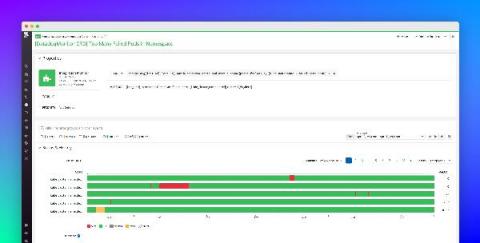
Kubernetes enables teams to deploy and manage their own services, but this can lead to gaps in visibility as different teams create systems with varying configurations and resources. Without an established method for provisioning infrastructure, keeping track of these services becomes more challenging. Implementing infrastructure as code solves this problem by optimizing the process for provisioning and updating production-ready resources.