The latest News and Information on Containers, Kubernetes, Docker and related technologies.
Kubernetes is one of the current leading technologies. Its adoption has seen tremendous growth in the past few years. The concept of containers is a paradigm that appears to be the predominant medium of software development and deployment in the coming future. Containers help maintain consistency across various platforms, as they pack an application with its dependencies to help move it from one platform to another.

We are happy to announce that the latest release of Calico Enterprise delivers unprecedented levels of Kubernetes observability! Calico Enterprise 3.5 provides full-stack observability across the entire Kubernetes environment, from application layer to networking layer. With this new release, developers, DevOps, SREs, and platform owners get: For more information, see our official press release.
Docker is a platform for developers and sysadmins to develop, deploy, and run applications using containers. Docker is also referred to as an application packaging tool. This means that enabled applications can be configured and packaged into a Docker image that can be used to spawn Docker containers that run instances of the application. It provides many benefits including runtime environment isolation, consistency via code, and portability.
Kubernetes makes it easier in certain ways to manage reliability. But incident response teams and SREs must also be prepared to handle the unique reliability challenges that K8s creates.
We are thrilled to announce the availability of Calico Enterprise 3.5, which delivers deep observability across the entire Kubernetes stack, from application to networking layers (L3–L7). This release also includes data plane support for Windows and eBPF, in addition to the standard Linux data plane. These new capabilities are designed to automate, simplify and accelerate Kubernetes adoption and deployment. Here are highlights from the release…
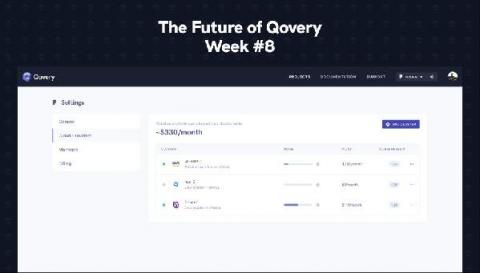
During the next two weeks, our team will work to improve the overall experience of Qovery. We gathered all your feedback (thank you to our wonderful community 🙏), and we decided to make significant changes to make Qovery a better place to deploy and manage your apps. This series will reveal all the changes and features you will get in the next major release of Qovery. Let's go!
Monitoring is not easy. Period. In our guide to Kubernetes monitoring we explained how you need a different approach to monitoring Kubernetes than with traditional VMs. In this blog post, we’ll go into more detail about the key Kubernetes metrics you have access to and how to make sense of them. Kubernetes is the most popular container orchestrator currently available. It’s available as a service across all major cloud providers. Kubernetes is now a household name.