The latest News and Information on Incident Management, On-Call, Incident Response and related technologies.
When it comes to observability, we’ve found that most organizations have ~20 tools installed in their IT environments. With so many tools, it’s difficult for IT leaders to gain insight into how their tools are performing and determine how much value ITOps is bringing to the organization.
Data teams are adopting more processes and tools that align with software engineering, and from talks at the dbt Coalesce conference in 2023, there’s clearly a big push towards adopting software engineering practices at enterprise scale companies. At the moment, there are a lot of tools in the data space for identifying errors in data pipelines, but no tools for responding to these errors, such as coordinating fixes. This is exactly where an incident management platform makes sense to implement.
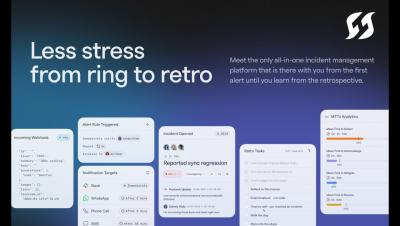
As engineers, we didn't want to make Signals only a replacement for what the existing incumbents do today. We've had our own gripes for years about the information architecture many old companies still force you to implement today. You should be able to send us any signal from any data source and create an alert based on some conditions. We're no strangers to building features that include conditional logic, but we upped the ante when it came to Signals.
Tool consolidation is the process of analyzing which IT observability and monitoring tools to use, which to add, and which to retire. By carefully determining the usage and value of your current observability stack, your ITOps teams can consolidate redundant tools and those providing little value to reduce your operational costs. While the benefits of tool consolidation are clear, doing so is anything but.