RESOLVE for Network - VoIP Performance Incident
RESOLVE can help shift-left your network investigations to the Service Desk to free up your Network Engineers from repetitive & mundane troubleshooting tasks.


The latest News and Information on Incident Management, On-Call, Incident Response and related technologies.
Manual ticket creation can often be a pain. It’s difficult enough handling the barrage of alerts coming in, let alone opening tickets and copy/pasting their details into these tickets. In this post – we discuss a simple way to ease this pain, and share a video on how to do it.
Our September update improves the assignment of categories to Signl alerts, hence the enrichment and routing of alerts to the right people. Until now, a ‘Services & Systems’ category was assigned to a Signl alert, if at least one of the entered keywords was found in the event content or text delivered to SIGNL4 by email or webhook. This basically represents a logical ‘OR’ operator for this keywords search.
Today, technology problems can alter the trajectory of a business. Minutes of downtime or latency (slow is the new down) cost organizations dearly in lost revenue and can jeopardize customer relationships. However, there’s an even more important consequence of technology problems than top-line risk: reduced innovation as teams are forced into reactive fire drills that take time away from product development.
Diamond mining is recognized as a dangerous occupation, causing serious accidents for mineworkers across the globe. Often times, these incidents turn out to be fatal because the victim didn’t receive immediate care from first responders. However, significant strides are being made to minimize the impact of these accidents by large, international organizations.
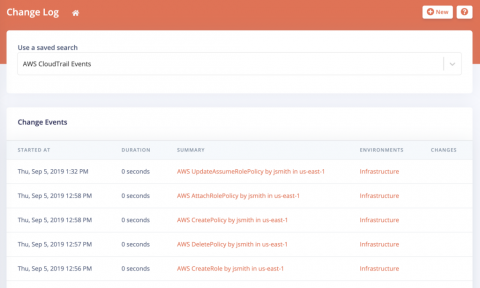
One of the most common reasons for system failures is changes to the underlying infrastructure. Amazon CloudTrail does a great job of recording when actions are taken but a lot of organizations don’t take advantage of it. FireHydrant now includes this data, giving you visibility into changes to your infrastructure while you’re investigating an incident.
Organizations need to continually ramp up and improve their security and resilience to unexpected incidents. But as the number of endpoints, networks, and user interfaces grow exponentially, the task becomes more difficult, and manual incident response management becomes less and less effective.