Operations | Monitoring | ITSM | DevOps | Cloud

Don't let compliance & security haunt you: What to expect in an audit

It’s Cyber Security Awareness Month, and many IT professionals are being haunted by the thought of gearing up for a security and compliance audit. Preparing for an IT audit can take months of planning. It can be time-consuming, uncomfortable, and stressful. Guess what else takes a long time and can be uncomfortable and stressful? Creating a human!

5 Weird Use Cases for Log Management

We’re all familiar with the typical use cases for log management, such as monitoring cloud infrastructures, development environments, and local IT infrastructure. So we thought it would be fun to cover some of the less usual, more wild use cases for log management, just to show that log management tools are more versatile, and more interesting, than they may seem. If any of these use cases look too interesting to ignore, let us know and we can do a full article on them!

New Microsoft Teams Performance Monitoring Solutions Buyer's Guide Helps Businesses Choose the Right Solution

Many organizations have become reliant on Microsoft Teams as the central hub of the digital workplace, allowing teams to work together more efficiently, amalgamating chat, file sharing, email, calendar, meetings, and integrations with countless third-party solutions all in one place. With this reliance comes the need for 24/7 reliability, so that users can stay productive on Microsoft Teams.

Instrumentation for C# .NET Apps with OpenTelemetry

OpenTelemetry is the recommended path today for instrumenting applications with tracing in a standard, vendor-agnostic and future-proof way. In fact, OpenTelemetry (nicknamed OTEL) encompasses all three pillars of observability: tracing, metrics, and logs. The tracing element of the specification is now stable with the rest following. This is innovative stuff! You can read more on OpenTelemetry and the current release state on this guide.

4 Tips to Streamline Intelligent IT Automation Deployment

According to a recent global survey by Deloitte, 73%of respondents said their organizations have officially embarked on a path to adopting intelligent IT automation. That being said, only 26% of survey respondents that are piloting automations and 38% of those implementing and scaling actually have an enterprise-wide intelligent IT automation strategy. So, what’s standing in their way?

Guide To AWS Load Balancers

The AWS Elastic Load Balancing (ELB) automatically distributes your incoming application traffic across multiple targets, such as EC2 instances, containers, and IP addresses, in one or more Availability Zones, ultimately increasing the availability and fault tolerance of your applications. In other words, ELB, as its name implies, is responsible for distributing frontend traffic to backend servers in a balanced manner.

Speak French well with La langue française, a Rails application deployed on Vultr with Cloud 66

This case study showcases La langue française, an online learning platform and publication that teaches people how to speak French. La langue française hosts their Ruby on Rails application on Vultr with the help of Cloud 66.

Five steps to better customer communication

When you’re deep into an incident and there’s alerts firing, decisions to be made, and people to escalate to, it’s easy for outward communication with your customers to fall off the priority list. In many regards this makes sense; it seems natural to put all of your focus and energy into minimising the impact and getting things back on track as soon as possible.

Network AF, Episode 4: Untangling business in the ISP industry with Elliot Noss

Today on the episode 4 of the Network AF podcast, host Avi Freedman welcomes his longtime friend Elliot Noss. For 25 years, Elliot has been the CEO of Tucows, the internet services company with the second-largest domain registrar in the world. Elliot is considered an outlier in the ISP industry, largely due to his transparency and for the stellar customer experiences he encourages through Tucows.

How to Manage an ETL Data Migration Into the Cloud

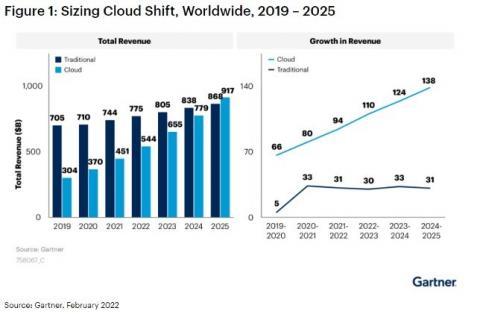
As organizations move their workloads into the public cloud, their environments gradually evolve. Initially, an organization tends to aim for a 1:1 migration of resources, typically in the form of virtual machines (VMs). Although this approach allows for an easier data migration path, it’s more costly and offers less flexibility than taking advantage of some of the serverless and Platform-as-a-Service (PaaS) offerings in the public cloud.