Operations | Monitoring | ITSM | DevOps | Cloud

ITSM Platform to Accelerate Digital Transformation

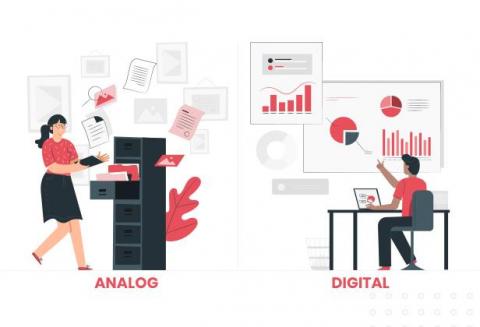
The ongoing changes in business operations across the globe have yielded one positive result for the businesses – the digital transformation process has accelerated. With teams working remotely, the need for collaborative, accessible, cloud-based, and secure platforms has never been more urgent.
Best practices for meta-monitoring the Grafana Cloud Agent

Earlier this year, we introduced the Grafana Cloud Agent, a subset of Prometheus built for hosted metrics that runs lean on memory and uses the same service discovery, relabeling, WAL, and remote_write code found in Prometheus. Thanks to trimming down to the parts only needed for interaction with Cortex, tests of our first release have seen up to a 40% memory-usage reduction compared to an equivalent Prometheus process.

A Platform to Automate All The Things

In my seven months at Puppet, I continue to be amazed at the opportunity we have to drive value in some of the biggest companies and institutions in the world. Automation is no longer a nice to have -- it’s a must. As more companies further their cloud strategies to include cloud-native infrastructures, the complexity increases, making automation indispensable.

Puppet and Relay: The Future of Hybrid Cloud Automation

Over the past year, we’ve talked to people building and operating the next generation of applications. Across the map, we saw cloud-native applications built upon an ever-increasing number of public cloud infrastructure APIs, tools, and managed services. Modern infrastructure lets anyone create automation, not just a few gatekeepers. This shift is powerful, but comes at the cost of complexity, which we built Relay to manage.

Why we built Mattermost Cloud

Mattermost Cloud offers our trusted Mattermost self-managed collaboration platform as a software-as-a-service and removes the burden of administration. Organizations are adopting cloud strategies and moving to cloud software. There are costs associated with hosting and securing software, especially in a highly available environment. Deploying and maintaining a self-hosted environment requires expertise and an upfront investment of infrastructure.

Survey: 47% of IT Professionals Said Quality of User Experience Has Not Suffered Due to Remote Work

Over the summer, we surveyed nearly 400 IT professionals regarding their use of enterprise service management in their organizations. This post highlights some of the survey's key findings, including: For many organizations, this preparation has paid off, with 61% of IT professionals claiming that they are consistently providing the same level of service working remotely, and 47% claiming that their quality of user experience has not suffered because of remote work.

Our Customer's Take on Why Catchpoint Leads the way - Gartner Peer Insights 2020

Gartner Peer Insights evaluates peer review and ratings for software and service providers. The reviews offer valuable insights for decision-makers and plays a key role in the IT buying process. Catchpoint was picked as a Gartner Peer Insights 2020 Customers’ Choice in the Network Performance Monitoring & Diagnostics (NPMD) category. Network performance monitoring and diagnostic (NPMD) tools aid in understanding network health, performance, and how it behaves in different scenarios.

Hypercare Support for the Holidays

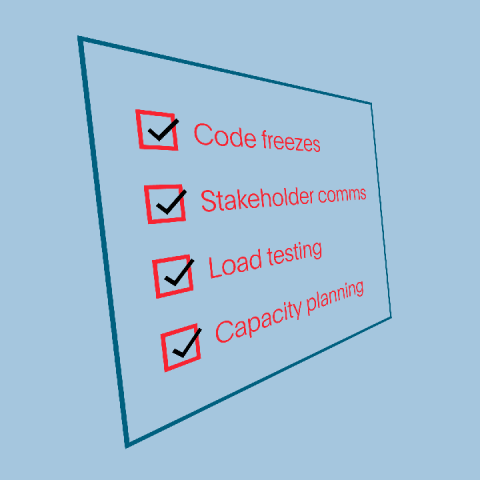
With the winter holidays fast approaching, many retail businesses are turning their focus to hypercare as they prepare to move goods and services at peak levels. But what is hypercare? Here at PagerDuty, we use the following working definition: Hypercare is the period of time where an elevated level of support is available to ensure the seamless adoption or operation of a system.

GNU Linux commands to inventory computer hardware

In the beginning we, as Humanity, created computers. We said “let it be electricity” and it was the light on our ballistic trajectory calculations. We saw the numbers matched and they were good. And we called the set of calculation instructions as “programs”, which were loaded straight into computer memories. And so was the first computing decade. GNU Linux commands didn’t exist yet, because there were no operating systems either.