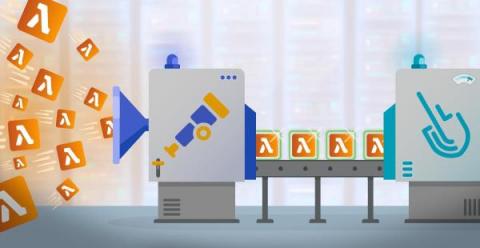
Announcing AWS Lambda Telemetry API Support for Sysdig Monitor
Observability in serverless computing environments, such as AWS Lambda, has always been a challenge.


Observability in serverless computing environments, such as AWS Lambda, has always been a challenge.
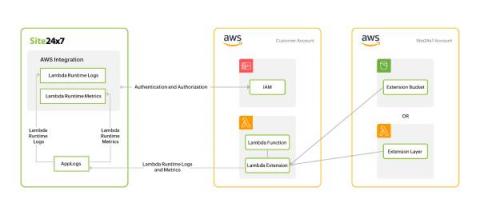
The Lambda Telemetry API empowers users to integrate monitoring and observability tools like Site24x7 with their Lambda functions. Site24x7 is an AWS-reviewed Lambda Service Ready Program Partner and is announced as a launch partner in AWS Lambda Telemetry API feature release. Customers, AWS partners, and the serverless community can use the Lambda Telemetry API to receive telemetry streams from the Lambda service, including function, extension logs, and metrics coming from the Lambda platform.
A single-line diagram (also known as an SLD or one-line diagram) is a simplified representation of an electrical system. Symbols and lines are used to represent the nodes and connections in the system, and electrical characteristics may be included as well. In a data center, a single-line diagram is used to visualize the power distribution system to improve planning and troubleshooting, ensure redundancy, and reduce potential outages.
There are a ton of leaves in my yard, and I’m slowly coming out of a weeklong sugar coma. That can only mean October has come and gone. Let’s take a peek at what new and noteworthy changes Honeycomb has made since we last checked in.
Back in 2020, we covered the launch of Lambda Extensions and the subsequent release of the Lambda Logs API. These features aren’t designed for the average Lambda user. But they allow vendors to build better tools by giving them much-needed access to the Lambda execution environment.
The Incident Management and Status Page solution that lets you organize your enterprise IT team and communicate with users for a coordinated response that restores services rapidly. StatusCast works as an Incident Management platform to increase employee productivity inside organizations. There’s a lot you can do with StatusCast status pages to create the brand look you are seeking.
Here at Grafana Labs, we’re deeply committed to our “big tent” philosophy — the idea that disparate data sources, from different software providers, in different industries, built for completely different use cases, can come together in one composable observability platform. As part of that commitment, we’ve set out to hear from our community about their observability practice and what they hope to see in this space in the future.
In today’s era of “Work from anywhere”, Data Security & Data Encryption has become a vital security step for organisations world-wide and a key component for security compliance. BitLocker is one of the popular Software Stacks for enforcing encryption on all devices & drives. Exponential complexity for managing the encryption compliance and the backup of the recovery keys for all devices in the organization has increasingly become a key challenge for EUC Professionals.
How can you tell if your systems are reliable when under load? A common answer is to open your observability dashboards, wait for a high-traffic event (like Black Friday), and cross your fingers. While this approach is certainly effective, it's far from ideal. Without proactive reliability and load testing, we have no idea if a system will hold up to real-world usage patterns, which could mean a production outage at the worst possible time.