Kubernetes monitoring involves tracking application performance and resource utilization across cluster components, such as pods, containers, and services. The goal is to gain visibility into the health and security of your clusters. Kubernetes provides built-in features for monitoring, including the resource metrics pipeline that tracks several metrics like node CPU and memory usage and a full metrics pipeline.
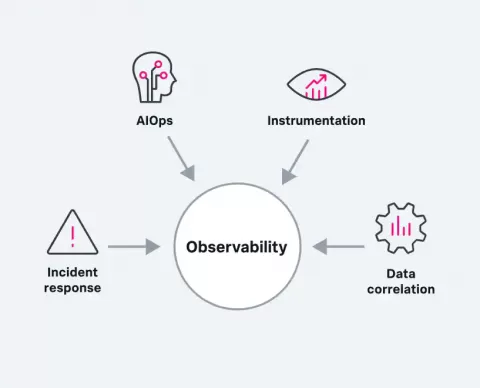
Making IT operations simpler – which AIOps does by helping teams to make smarter, more informed decisions about complex monitoring and APM problems – is great. But what would be even greater is eliminating the need for IT teams to make decisions at all – a prospect known as NoOps. By automating application management to the point that human involvement is no longer necessary, NoOps offers tantalizing possibilities for the IT operations teams of the future.
OpenTelemetry enables Observability, and building observable systems requires you to understand the various ways in which they can fail. Jumping from one possible fix to another and one change to another without fully recognizing the impact on the system can be a significant hindrance to a successful customer experience. In this post, I’ll explain how to get started with OpenTelemetry to help you make your systems more observable.
Loggly is a feature-rich log management platform that also offers a wealth of features including automated log summaries, custom derived fields, unlimited users, search & filters and email alerts. Loggly is often used to solve a variety of logging use cases including handling Meteor, Java, IIS, Docker and Apache logs.
If you’re a banking customer, chances are you’ve used a product created by Intellect Design Arena. The Chennai-based fintech company supports more than 10 million transactions a day across 91 countries, with cloud-native solutions for core banking, transaction, risk, treasury, and insurance. Intellect has doubled its customer base nearly every year.
The future of financial services technology infrastructure is hybrid multi-cloud. Hybrid multi-cloud architecture provides financial institutions flexibility, portability, interoperability, and the control needed to consistently deploy and manage enterprise applications and workloads. By adopting hybrid cloud, finservs realise the benefits of effective cloud cost management, security, compliance, efficiency and agility. The hybrid cloud strategy starts with choosing the right enterprise Linux.
We have released an update for Enterprise Alert 9 (version 9.3) that revolutionizes our OPC connector and also includes some bug fixes. Read all the details in this article.
Cooling systems are one of the most important components of a data center. They often consume about half of all the data center’s total energy and are necessary to maintain a safe operating environment. The American Society of Heating, Refrigerating, and Air Conditioning Engineers (ASHRAE) thermal guidelines recommend that the ideal temperature for server inlets is between 64.4° F and 80.6° F with a relative humidity between 40% and 60%.