N-able Announces New Chief Security Officer and General Counsel to Its Executive Leadership Team
New positions bring extensive experience and knowledge to help fuel global partner success.


Server Monitoring is referred to as consistent monitoring of all network infrastructure, related to servers to analyses their resource utilization trends & later optimize it for a smooth end-user experience. The concept of server monitoring is straight forward, it is the collection of data from servers & real time or historical data analysis to make sure that the network servers are free from impending issues are performing optimally thereby fulfilling their intended function.
AppSignal is your one-stop shop for application monitoring. Today, we’re releasing uptime monitoring. Simply add any endpoint you want to check for uptime and AppSignal will monitor it from locations around the globe, 24/7. Uptime monitoring expands our current feature set (error tracking, performance monitoring, metric dashboards, server metrics, and anomaly detection). All features are combined in a beautiful and easy-to-use interface, with a friendly pricing model for developers.
PostgreSQL monitoring with Prometheus is an easy thing to do thanks to the PostgreSQL Exporter. PostgreSQL is an open-source relational database with a powerful community behind it. It’s very popular due to its strong stability and powerful data types. In this article, you’ll learn the top 10 metrics in PostgreSQL monitoring, with alert examples, both for PostgreSQL instances in Kubernetes and AWS RDS PostgreSQL instances.
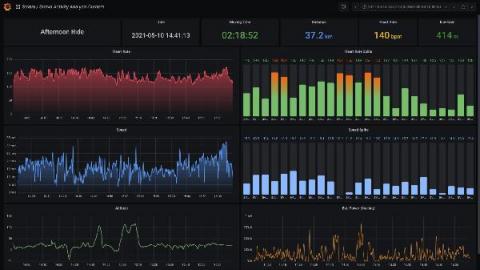
Grafana dashboards are often used to monitor a company’s metrics, but what about using them to monitor yourself? That was the thinking behind our creation of the Strava plugin back in early 2020. Strava is a service that allows athletes to track and analyze their workouts and training sessions. It’s widely used for activities such as running and cycling.
The consequences of poor application performance are both real and terrifying: lost customers, lost trust from your team, and lost confidence in your abilities. It’s why every developer remembers those moments where their solution improves both process and performance. We’ve seen this happen firsthand with our customers, and want to share their Great Moments in Application Monitoring.
The success of any managed service provider (MSP) is dependent on the people who work for it. When MSP employees are dissatisfied, unhappy, or unengaged they will be less be motivated, efficient, and productive. Employees make or break a company, so it’s vitally important to keep them satisfied with their work.
This week Google unveiled a number of exciting announcements at its annual developers’ conference, Google I/O 2021. Announcements included Android 12 and several security and privacy features that are coming to its platforms. At Ivanti, we are particularly excited about what Google is doing to improve user security and privacy. The consistent theme of Google I/O was Secure by default, Private by design, and You’re in control.