Operations | Monitoring | ITSM | DevOps | Cloud

Hardening Windows security: How to secure your organization-Part 3

This is the final blog of our three-part blog series on living-off-the-land (LOTL) attacks. If you missed last week’s blog, you can read it here. LOTL attacks are also known as “malware-free” attacks because your own tools are used against you, either to hide malicious activities under a legitimate system process, or to leverage genuine system activities for malicious purposes.
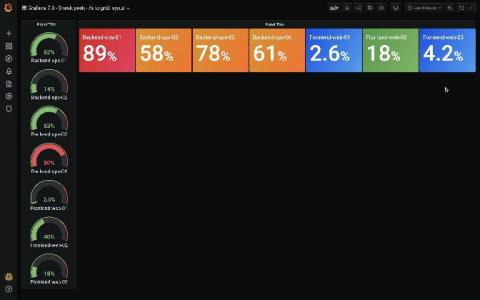

Grafana v7.0 is coming soon! Check out this sneak peek of the auto grid layout

Grafana v7.0 is coming next month! Here’s a sneak peek of one new feature: the auto grid layout. This new 7.0 feature is for the gauge and stat panels. Before, stat and gauge only supported horizontal or vertical stacking: The auto layout mode just selected vertical or horizontal stacking based on the panel dimensions (whatever was highest).

Integration and Shipping Okta Logs to Logz.io Cloud SIEM

Company security usually depends on your ability to come up with a diverse set of passwords and then manage them. Remembering all of them is considered a tad too difficult for most mere mortals, so a number of password storage apps have emerged. But they too have to be secured, and ultimately results in inefficient access and flawed security. Single-sign on (SSO) is still preferred, but to make it effective, companies like Okta have to secure integration across a number of apps.

How tech teams are making extraordinary progress in COVID-19 shutdown while working remotely?

COVID-19 has led businesses into extreme work challenges. To overcome these challenges, companies have shifted their working patterns and have embraced Remote Work to avoid any negative impact on employee’s health as well as the business. COVID-19 has made IT-sector office culture’s shift to remote work prominently. The tech teams, who already have DevOps processes in place, got huge benefits and did not get much impact while shifting their workplace from regular office to home.

How to Use Lambdas in Ruby

Lambdas are a powerful feature of the Ruby language. They allow you to wrap logic and data into a portable package. In this post, we’ll cover how and when to use lambdas. You'll also learn about the difference between lambdas and Procs, and the performance profile of lambda functions. The code examples have been tested with 2.6 and 2.7 and should work with most modern Rubys.

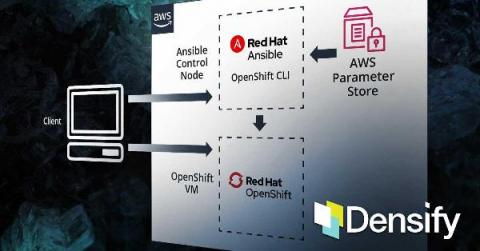
Scaling OpenShift Container Resources using Ansible

Assume you have a process to determine the optimal settings for CPU and memory for each container running in your environment. Since we know resource demand is continuously changing, let’s also assume these settings are being produced periodically by this process. How can you configure Ansible to implement these settings each time you run the associated playbook for the container in question?

The High Cost of NOT Monitoring Every Business-Critical Application

Maybe you’ve been there. You’re a VP of engineering, or a product owner. There was a critical outage in one of your apps, and it took your team an entire week to track down and fix the issue. Customers and revenue were lost. Now you’re sitting in a review meeting with a consultant hired to figure out what happened and why.

How PagerDuty and Partner Rundeck Enable Business Continuity for Digital Operations

At times like these when the world has been forced to adapt and go almost entirely digital, it’s imperative that our systems and platforms stay up and operational—all the times. We are going to great lengths to make sure that the hardware and software in our application stacks are reliable and responsive. Hardware is set up to have redundant backups and new code is tested and reviewed to make sure it doesn’t introduce any bugs into the system.