Operations | Monitoring | ITSM | DevOps | Cloud

The Three Pillars of Network Monitoring: A Holistic Strategy

To truly safeguard your infrastructure, it’s crucial to adopt a holistic strategy that covers every aspect of your network’s health and performance. This means integrating fault monitoring, performance monitoring, and availability monitoring into a comprehensive strategy. Lets discuss how a well-rounded approach to network monitoring can help you maintain resilience, optimize performance, and prevent downtime.

9 Reasons Your Business Needs Continuous Network Monitoring in 2025

Numerous technological advancements have made it easier to conduct financial transactions and business. However, cyber-attacks and network inefficiency remain a threat. That’s why your business needs continuous network monitoring. Keeping constant watch over the IT infrastructure of your business is crucial for its survival. It would be very disappointing for your thriving enterprise to come crashing down due to easily thwarted threats that went unnoticed.

5 Ways to Avoid Alert Fatigue in Network Monitoring

Alert fatigue is the silent productivity killer in IT operations, and its impact is more significant than you might think. A 2023 survey by CloudHealth Technologies found that 63% of organizations deal with over 1,000 cloud infrastructure alerts every single day. 22% report receiving more than 10,000 alerts each day. This highlights the critical need to minimize alert fatigue.

What is Behavior-Driven Development (BDD)?

Behavior-Driven Development (BDD) is a software development methodology in which applications are built to match the behaviors a user would expect from the software. An evolution of Test-Driven Development (TDD), BDD gathers user stories about how users expect applications to behave, then creates software tests to validate that their applications match this behavior. The BDD methodology utilizes specific language and naming conventions.

How to Choose the Right Network Monitoring Tool: 7 Essential Factors

Half of all server failures lead to staff working overtime, driving up costs and highlighting the critical need for effective monitoring. This underscores the importance of choosing the right network monitoring tool. It is a critical decision that impacts not only how well your infrastructure performs today but also how easily it can scale and adapt in the future. A comprehensive monitoring solution needs to balance deep technical capabilities with ease of use and scalability.

Why LogicMonitor is best for network monitoring

As modern networks evolve into intricate ecosystems spanning on-premises, cloud, and hybrid environments, the need for a robust, scalable monitoring solution has never been greater. Organizations face the challenge of maintaining performance, minimizing downtime, and managing ever-increasing complexity.

NinjaOne01 Testing Image Backup Restores

Backups are a critical part of any IT operation. You never know when a file may be corrupted or accidentally deleted, when a hard drive will suddenly fail, or a system will die. Backups help us recover from such incidents and provide peace of mind. However, something that is often overlooked is the practice of testing your backups, especially full system or image backups.

Think proactive monitoring for Teams Phone is too good to be true? Think again.

Collaboration platforms like Microsoft Teams are absolutely central to how enterprises get business done these days. But sometimes the fastest, most direct way to answer a question, solve a problem or make a connection is still to pick up the phone and call. The value of solutions like Microsoft Teams Phone is that they offer the best of both worlds: the simplicity and efficiency of voice communication integrated with digital collaboration tools and capabilities.

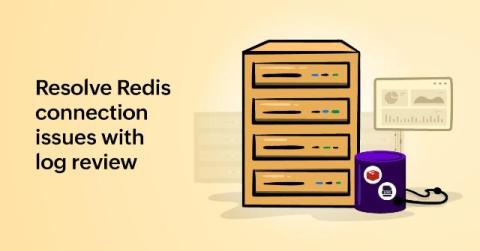
Resolving Redis connection issues with comprehensive log review

Redis is a highly efficient, versatile in-memory data store that is commonly utilized in modern applications. However, like any technology, it is not without its challenges, particularly when it comes to managing connections. By systematically reviewing Redis logs, you can diagnose and resolve these problems effectively. This blog provides an overview of Redis logs, explores their importance, and highlights how log management tools can simplify troubleshooting.