Operations | Monitoring | ITSM | DevOps | Cloud

Why is Test Automation Reporting Important for Software Development?

If you're working in a software company, you are probably already using test automation tools to automate the software testing process. But are you creating testing reports just as fast and accurately as the executed tests? The test reports have a lot of elements that you need to meticulously write down without making any mistakes. And it takes a lot of time.


Why Every Student Should Consider Taking a Summer Class

The idea of spending the summer months attending classes may not initially sound appealing to students. However, the benefits of taking a summer class can be significant and far-reaching. From flexibility and acceleration to academic growth and exploration, there are numerous reasons why every student should consider enrolling in a summer course.

Balancing Innovation and Reliability: A Guide for SRE Teams

In today's rapidly evolving technological landscape, striking a balance between innovation and reliability is a constant challenge for Site Reliability Engineering (SRE) teams. On one hand, businesses and customers crave the constant stream of new features and functionalities that fuel progress. On the other hand, ensuring system stability, minimal downtime, and optimal performance remains paramount for user experience and business continuity.

Managing distributed networks? Here's how a comprehensive IPAM solution simplifies the task

As organizations expand globally in the digital realm, distributed networking is inevitable. To ascend the growth ladder, they must embrace both digital and geographical evolution. This means, as IT infrastructure evolves, organizations are required to adapt. This includes monitoring, modernizing, and streamlining processes and resources across growing system requirements, application stacks, diverse protocols, and security defenses.

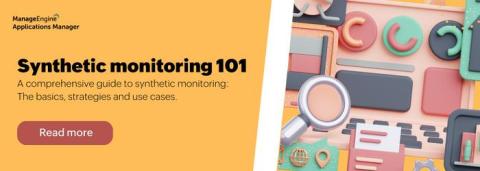
Synthetic monitoring 101: A comprehensive guide to synthetic monitoring

Synthetic monitoring or synthetic testing is a way of ensuring the performance and availability of applications, websites, and IT infrastructure by creating simulated user interactions and generating artificial transactions that mimic real user behavior. This helps organizations preempt issues on response times and application functionalities by emulating user behavior to measure response times, identify potential bottlenecks, and troubleshoot performance issues before they impact actual users.

Start Monitoring Third-Party Outages in Opsgenie

In today's digital world, we rely a lot on third-party services. These services are great because they help us grow, be more flexible, and work more efficiently. However, they also make things more complicated and risky. If a service we depend on stops working, it can cause big problems. To deal with this, we're excited to introduce a new feature that connects Opsgenie with IsDown.

A Complete Guide to Inventory Management Software

In the fast-paced world of business, effective inventory management is crucial for optimizing operations and maximizing profitability. At the heart of this process lies Inventory Management Software, a powerful tool designed to streamline and control the entire lifecycle of a company's inventory. Inventory management, in essence, refers to the systematic approach of overseeing and controlling the ordering, storage, and use of materials, goods, and products.

A Beginner's Guide to Using CDNs

Websites have become larger and more complex over the past few years, and users expect them to load instantaneously, even on mobile devices. The smallest performance drops can have big effects; just a 100ms decrease in page load time can drop conversions by 7%. With competitors just a click away, organizations wishing to attract and retain customers need to make web performance a priority. One relatively simple method of doing this is by using content delivery networks (CDNs).