Operations | Monitoring | ITSM | DevOps | Cloud

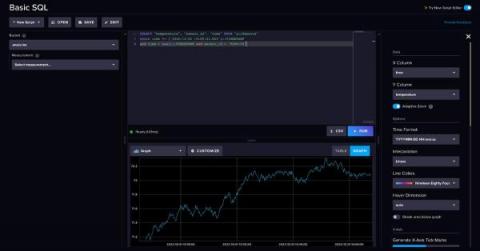
Querying Data in InfluxDB Using Flux and SQL

With the release of InfluxDB’s new storage engine for InfluxDB Cloud, InfluxDB Cloud now supports SQL. This is because the updated InfluxDB uses the Apache Arrow DataFusion project as a key building block for its query execution engine. DataFusion’s sophisticated query optimizations support near unlimited cardinality data in InfluxDB Cloud.

Modern observability and security on Kubernetes with Elastic and OpenTelemetry

The structured nature of Kubernetes enables a repeatable and scalable means of deploying and managing services and applications. This has led to widespread adoption across market verticals for both on-premises and cloud deployment models. The autonomous nature of Kubernetes operation, however, demands comprehensive, fully-converged observability and security. This is uniquely possible today using the Elastic platform.

Three cloud trends to watch in 2023

Digital transformation continued apace in 2022, with the public cloud helping businesses reduce the financial risk of innovation and drive agility when they need it most. A quote from Dave McCarthy, Research Vice President at IDC, sums up the sentiment of the year: "Cloud is no longer considered a location but rather an operating model for future innovation." With that in mind, here are three of the key cloud trends to watch in 2023…

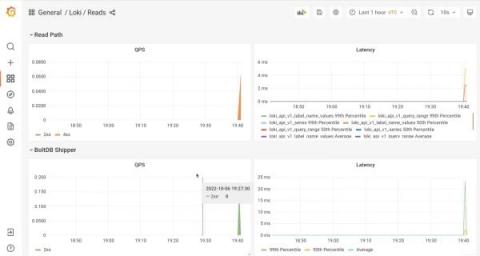
The only Helm chart you need for Grafana Loki is here

The community has spoken, six Helm charts is not enough! We agree! In all seriousness though, six charts is simply too many to maintain. And while it might sound counterintuitive, that’s why we are announcing a new Helm chart. By focusing on the “Grafana Labs way" to run Grafana Loki using Helm, we believe this will help us and the community concentrate our Helm efforts into a single chart. This new chart is released under grafana/loki at Helm version 3 or higher.

Jira GitLab Integration

Integrating Jira and GitLab is one of the best ways for software teams to streamline their workflows and improve team collaboration. GitLab and Jira are two of the most popular tools available for tracking projects and development work. GitLab is primarily a hosting service that allows development teams to store their code. GitLab saw its first commit made in 2011 and has grown to over 30 million registered users in 2021.

Jason Chan on How Torq Overcomes Cybersecurity's Biggest Challenges

Jason Chan is one of the world’s foremost cybersecurity authorities and we’re extremely proud to have him as a member of the Torq Advisory Board. He’s a pivotal figure in driving adoption of security automation best practices at many companies, including Netflix, where he led the information security organization.

How we scaled a stateful microservice using Redis

At LogicMonitor, ingesting and processing time series metric data is arguably the most critical portion of our unified observability platform. In order to fully prepare for growth, scale, and fault-tolerance, we have evolved what we refer to as our Metrics Processing Pipeline from a monolith to a microservice-driven architecture.

HAProxy User Reviews Show Community Momentum

{ If you think you can’t do something with HAProxy, go have a look, because you probably can. Onward and upward! In 2022, many happy HAProxy users turned to G2 – a leading aggregator of user reviews and product ratings – to leave their feedback. These user reviews were so positive that G2 recognized HAProxy as a Leader in Load Balancing, DDoS Protection, and API Management, with an additional leadership position for momentum in the load balancing market.

Microsoft Teams Direct Routing: Making Teams Your Phone System

Remote and hybrid work have made Microsoft Teams a core tool in nearly all large organizations. Many business leaders and IT administrators would like to extend the value of Teams to enable users to make and receive business phone calls. This improves the productivity of their employees by keeping them connected with customers, business partners, and co-workers in the office, at home, or even on the road.

5 security hardening CFEngine policy examples

Throughout the security holiday calendar, we’ve looked at modules for enforcing security requirements. Writing the policy to achieve these security hardening goals is easy. By learning how, you can write policy (or modules) for any requirements, including those specific to your organization. In this blog post, we’ll take a look at five beginner-level examples to get you started, focusing on the most common resources to manage with CFEngine; files and packages.