Operations | Monitoring | ITSM | DevOps | Cloud

What Are the Various Types of Inventory Management?

Inventory is important for all organizations as somehow it is an integral part of your business. However, the organization does not give priority to inventory management as a result business suffers from loss due to negligence of inventory management. Therefore, in this blog, we will cover types of inventory management and other topics that will help you in better inventory management. But first, let us know what exactly the inventory and inventory management is!

Azure Service Bus Logging with BAM - Walk-through

In a previous article, we talked about how you could use BAM to do advanced management of dead lettered messages on the Azure Service Bus using a scenario like below. This article will show how you can set up this kind of example. Let’s assume your Order Processing functions are already in place, and your starting point is that sometimes you will get dead-lettered messages, and we need to implement the Send message to the BAM logic app and configure Serverless360.

What Is a Distributed System?

Before you can answer this question, I like to step back and take a good look at the history of computing. Mainframes and legacy client-server applications were monolithic—all the processing took place on a single set of hardware. As hardware grew cheaper, and especially after widespread hardware virtualization came to fruition, these trends gave way to the widespread development of distributed systems. I began to see this trend during my time as an architect at a large cable and telecom provider.

How Reliability and Product Teams Collaborate at Booking.com

With more than 1.5M room nights booked per day, Booking.com requires a solid infrastructure that’s constantly monitored. And indeed, Booking.com now has a footprint of 50,000+ physical servers running across four data centers and six additional points of presence. The sheer size of this server fleet makes it viable for Booking.com to have dedicated teams specializing into looking only at the reliability of those servers.

Dashbird now integrates with 5 new AWS services

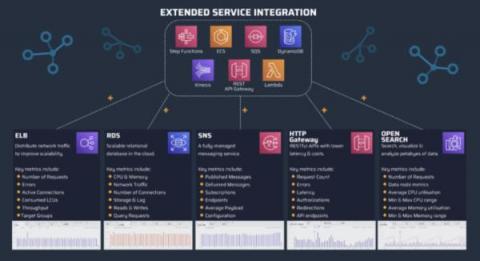
TL;DR: Dashbird launches observability for five new AWS services (ELB, SNS, RDS, OpenSearch, and HTTP API Gateway) to allow for a faster, more secure, and smoother serverless observability experience. Dashbird, the leading monitoring platform for serverless AWS applications, announces five new AWS integrations.

Argo CD 101 and Setup for Shipa

There is a lot of the art of the possible between the GitOps Engine, Argo CD, and the Application-as-Code platform, Shipa. In a recent blog post, we outlined the power of a one-line developer experience. Though if you are unfamiliar with ArgoCD, here is a guide to get you started with Argo CD and leveraging Shipa for your first deployment.

Continuous Service Virtualization, Part 2: Steps for Optimizing DevOps

In my prior blog, Continuous Service Virtualization, Part 1: Introduction and Best Practices, we offered an introduction to continuous service virtualization (SV) and discussed some key best practices. In this, the second and final post in the series, we will discuss the continuous SV lifecycle and how it helps to optimize DevOps and the continuous integration/continuous delivery (CI/CD) pipeline.

Continuous Service Virtualization, Part 1: Introduction and Best Practices

Service virtualization (SV) has evolved as a popular technique and technology over the last decade. Traditionally, SV has primarily been used by testers to simulate other application components that the application under test interacts with. Typically, virtual services have been created and maintained by center of excellence (COE) teams.

Leveraging AIOps to Enable Greater Customer Experiences

As time progresses and competition grows, being “good enough” means that you may be falling behind. Engineers will discover new ways to solve problems, which will enable rapid increases in availability and scalability. With these increases comes more complexity and the generation of more data. Rather than just monitoring the new data and letting the old data sit there collecting dust, you should consider using it to gain maximum insights into your environment.

4 benefits of a connected workforce in manufacturing

The manufacturing skills gap is projected to leave more than 2 million jobs unfilled by 2030, costing the US economy as much as $1 trillion, according to a report by Deloitte and The Manufacturing Institute. When COVID-19 hit, about 1.4 million people lost manufacturing jobs, according to the report. Although the industry has hired back many workers, hundreds of thousands of positions remain unfilled. On top of layoffs, workers are retiring en masse.