As software got more complex, more and more software projects rely on API integrations to run. Some of the most common API use cases involve pulling in external data that’s crucial to the function of your application. This includes weather data, financial data, or even syncing with another service your customer wants to share data with. However, the risk with API development lies in the interaction with code you didn’t write—and usually cannot see—that needs debugging.
Here at RapidSpike, we have an ever-growing list of integrations available to help manage incidents raised from all facets of our system. The latest addition to the roster being Splunk On-Call (formerly known as VictorOps).
Recently, we released our new “Calico Certified Operator: AWS Expert” course. You can read more about why we created this course and how it can benefit your organization in the introductory blog post. This blog post is different; it’s an opportunity for you, the potential learner, to get a glimpse of just a few interesting parts of the course. You won’t learn all the answers here, but you’ll learn some of the questions!
If there’s one thing folks working in internet services love saying, it’s: "Yeah, sure, but that won’t scale." It’s an easy complaint to make, but in this post, we’ll walk through building a service using an approach that doesn’t scale in order to learn more about the problem. (And in the process, discovering that it actually did scale much longer than one would expect.)
Hiya! Our Elasticsearch team is continually improving our index Lifecycle Management (ILM) feature. When I first joined Elastic Support, I quickly got up to speed via our Automate rollover with ILM tutorial. I noticed after helping multiple users set up ILM that escalations mainly emerge from a handful of configuration issues. In the following sections, I’d like to cover frequent tickets, diagnostic flow, and common error recoveries. All commands shown can be run via Kibana’s Dev Tools.
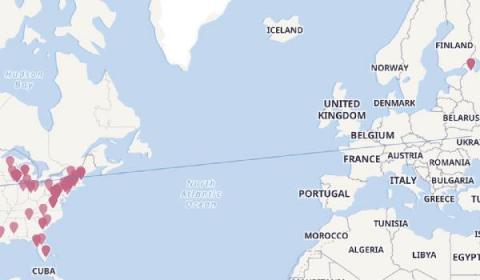
As we’ve shown in a previous blog, search-based detection rules and Elastic’s machine learning-based anomaly detection can be a powerful way to identify rare and unusual activity in cloud API logs. Now, as of Elastic Security 7.13, we’ve introduced a new set of unsupervised machine learning jobs for network data, and accompanying alert rules, several of which look for geographic anomalies.