Operations | Monitoring | ITSM | DevOps | Cloud

Backlinks still move the SEO needle

Despite algorithm shifts, Google's core trust signals continue to reward high-quality, relevant links. But outreach is slow, scaling is painful, and most marketers would rather not send 300 cold emails just to land one backlink. That's where AI steps in. Over the past 60 days, I tested a range of AI-powered link building platforms. Some promise end-to-end automation. Others assist with research, personalization, or prospecting. Each tool brings a unique strength - and yes, a few surprises.
Sponsored Post

Smarter alerts using P75 for more signal and less noise

We've rolled out a new feature in Raygun Alerting that gives you more control over how you track and respond to performance regressions. Starting today, you can now use the 75th percentile (P75) as a filter option for page performance data in Real User Monitoring, such as Core Web Vitals and page load time, right alongside the default 'Average'. This option is available under the "Page/XHR performance change" condition and supports all the Web Vitals metrics we track: Let's break down why this matters, when you should use P75, and how it gives you better, faster insights into how real users are experiencing your site or app.

5 Tips for Managing Client Sites With Oh Dear

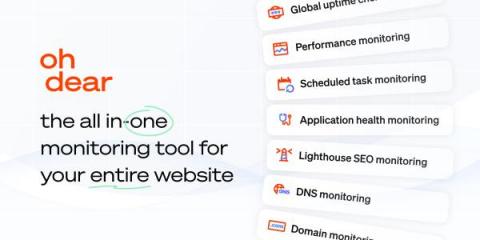
Managing dozens (or hundreds) of client sites can quickly become chaotic without the right tools. Whether you're running an agency, internal platform team or dev shop, visibility and control are everything. That's where Oh Dear comes in. Oh Dear is an all-in-one monitoring service that gives you a unified dashboard for uptime checks, performance monitoring, broken link detection, SSL and domain expiry alerts, scheduled task validation and more.

The 3 smart updates to our Jira plugin

The Jira plugin is one of our most-used integrations and for good reason. Teams rely on it daily to stay on top of work, manage issues, and ship on time. As more people leaned on it, we saw a chance to make the experience even smoother. So, we gave it an upgrade. We’ve refreshed the out-of-the-box dashboards, simplified the data streams, and improved the overall experience. So, let’s take a closer look at what’s changed.

Cloud Workload Management: What It Is And How To Do It

The cloud gave us agility, but it also introduced fragmentation. And in most companies, no one’s fully owning the sprawl. One team deploys a new service in a hurry. Another forgets to shut down a dev environment. Meanwhile, batch jobs run 24/7 on oversized instances. And no one quite knows why your bill is $10K higher this month. The result? A growing source of cost overruns, performance headaches, and operational inefficiencies. This is exactly why cloud workload management is so crucial.

Map, Transform, Filter: How Copilot Editor Helps Teams (and Their Pipelines) Have It All

Ever spent a week wrangling log pipelines just to get your SIEM to stop screaming about missing fields? Wasted way too much time stripping out noisy events and reformatting data for analytics? You’re not the only one. If you work in Security or ITOps, you know the pain: every new data source means another round of schema headaches, more manual mapping, endless field transformations, and a quick prayer that you didn’t break something critical (or let in a flood of junk events).