Operations | Monitoring | ITSM | DevOps | Cloud

From Birth to Retirement: The Dynamics of Asset Lifecycle Management

Managing the lifecycle of assets plays a significant role in how organizations monitor, maintain, and enhance their assets from the moment they are obtained until they are disposed of. This proactive strategy guarantees that both physical and intangible assets are utilized to their potential throughout their lifecycle, leading to increased efficiency and overall success for businesses. In this article, we will explore the stages of asset lifecycle management and discuss some effective strategies for handling assets from inception to retirement.
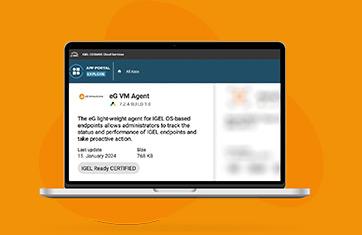
eG Enterprise Monitoring Now Available on the IGEL App Portal

For several years, eG Innovations has been providing advanced AIOps-powered monitoring and observability to customers leveraging IGEL-powered devices in VDI and DaaS environments. Our out-of-the-box metric thresholds, alerting, dashboards, and reporting ensure IT teams can proactively avoid end-user support calls and tickets and ensure organizations get optimal performance from their IGEL investment. IGEL and eG Innovations recently announced the availability of eG Enterprise on the IGEL App Portal.

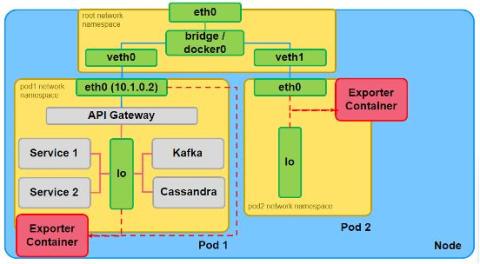
Progress Flowmon Monitoring for Kubernetes Applications

From the perspective of network administrator and operator, the fundamental requirements for network applications are the same regardless of the environment they are running in. They need to have their network communication fast, reliable and secure. To meet these requirements, we need to have relevant data about the application traffic.

How to Detect & Troubleshoot Internet Brownouts

So, you've invested in a high-bandwidth Internet line for your business, complete with a service level agreement (SLA) ensuring consistent uptime. Sounds foolproof, right? Not quite. Despite meeting the SLA requirements for uptime, you might encounter performance issues severe enough to disrupt your cloud-based applications. Sure, technically, the connection is still up, but it's practically unusable. The frustrating part?

Conquering Data Lakes and Searching Google Cloud Storage Buckets With Cribl Search

What might you accomplish if you could easily search your data lakes without paying to move the data first? The most likely outcome is that you address a critical security incident quicker than ever, save your organization millions of dollars, get a promotion, and then go down in history as the best-looking, most talented analyst to have searched a storage bucket.

Software Ate the World, but Digital Transformation Can Give You Indigestion

In today’s digitally-driven world, organizations rely heavily on software applications to streamline services, provide operations, engage customers, and drive innovation through digital transformation. Software has also become the lynchpin for securing an entire business’ services and keeping them up and running. Yet, this omnipresent force comes with its own set of challenges.

Reduce alert noise, automate incident response and keep coding with AI-driven alerting

Noisy monitors can lead to alert fatigue, which frustrates engineers and hinders innovation. With our patent-pending anomaly detection capabilities built on the power of AI, you can eliminate 60-90% of alerts. A unique differentiator, Sumo Logic’s alerts can also trigger one or more playbooks to drive auto-diagnosis or remediation and accelerate time to recovery for application incidents. Faster issue remediation means engineers can focus more time on development and releasing software.

How to scale your systems based on CPU utilization

CPU usage is one of the most common metrics used in observability and cloud computing. It’s for a good reason: CPU usage represents the amount of work a system is performing, and if it’s near 100% capacity, adding more work could make the system unstable. The solution is to scale - add more hosts with more CPU capacity, migrate some of your workloads to the new host, and split the traffic between them using a load balancer.

The Coexistence of Open Source and Proprietary Software: Striking the Balance

Discover how to build a technology infrastructure to get the best of both open source and proprietary software The debate on the cohabitation of open source software (OSS) and proprietary software has persisted as long as both have existed. OSS, designed for unrestricted access and usage, and proprietary software, its opposite, have often been positioned as opponents in the technology arena. However, the reality is far from this either/or dynamic.

OpenTelemetry Best Practices #2 Agents, Sidecars, Collectors, Coded Instrumentation

For years, we’ve been installing what vendors have referred to as “agents” that reach into our applications and pull out useful telemetry information from them. From monitoring agents, to full-blown APM tools, this has been the standard for many decades. With OpenTelemetry though, the term “agent” isn’t used as much, and in most scenarios means something slightly different.