Operations | Monitoring | ITSM | DevOps | Cloud

N-sight PME Update-Exploring Granular Patch & Best Practices

The Patch Management Engine (PME) in N-able N-sight RMM has been updated! I cannot stress how excited I am for granular patching. With the ever-changing security landscape in today’s world, we need more control over patching than ever. In this blog, I will quickly review the PME updates and give some quick-hit best practices that have served me well in the real world.

Synthetic monitoring as Code with Checkly and ilert

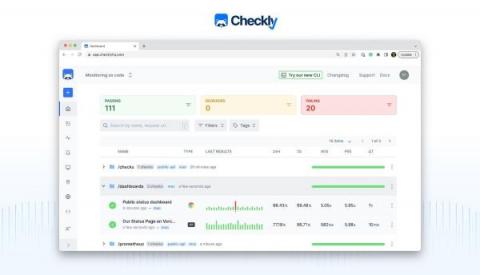
This post will introduce Checkly, the synthetic monitoring solution, and their monitoring as code approach. This guest post was written by Hannes Lenke, the CEO, and co-founder of Checkly. ‍ First, thanks to Birol and the ilert team for the opportunity to introduce Checkly. ilert recently announced discontinuing its uptime monitoring feature and worked with us on an integration to ensure that existing customers could migrate seamlessly. ‍ So, what is monitoring as code and Checkly?

Organizational Change Management Models: 4 Models for Driving Change

Change is hard. Instigating change across an organization can feel nearly impossible. Just ask any executive about a time when they tried implementing new rules or introducing new software across the company, and you’ll hear plenty of horror stories. While many of us know the pitfalls associated with making changes that impact multiple stakeholders, there are ways to do it successfully.

What is ITIL Service Operation? Functions, Processes, and Best Practices

ITIL service operation is the fourth stage of the service lifecycle. It's responsible for the day-to-day support and maintenance of all IT services. Done well, it can protect the live environment, restore service quickly in the event of incidents, and investigate the root cause of preventable incidents. In the following article we will see how service operations work, the benefits it can bring to your organization, and its main functions and processes.

Accelerating Log Management with Logging as a Service

The basic goal of log management is to make log data easy to locate and understand so that users can identify how their services are performing and troubleshoot more quickly. Logging as a Service, or LaaS, takes log management a step further by providing a solution that seamlessly scales and manages your log data via cloud-native architecture.

What Is AWS EKS, and How Does It Work With Kubernetes?

Amazon Elastic Kubernetes Service (Amazon EKS) is a system that makes it easier to run Kubernetes on AWS and on-premises. This managed AWS Kubernetes service scales, manages, and deploys containerized applications. Through EKS, you can run Kubernetes without installing or operating a control plane or worker nodes — significantly simplifying Kubernetes deployment on AWS. So what does it all mean?

Top 5 Use Cases for Custom Fields on Incidents

Chasing down critical information in disparate systems of record while trying to resolve an incident can make an already stressful situation even more taxing. Extra clicks, extra logins, copy/paste, socializing that information with other responders–it all wastes time and introduces more room for human error. Now PagerDuty customers can use Custom Fields on Incidents to enrich their incident data.