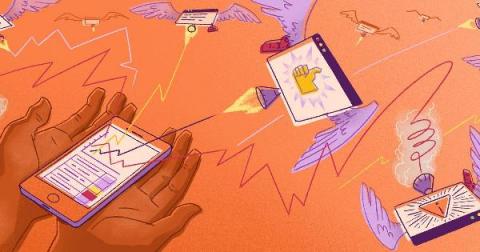
When you send alerts, work orders or service requests to your workers in the field, on the shop floor or campus it is essential to provide them with all relevant information necessary to solve the task. This prevents misunderstandings, avoids waste work, time for searching information and thus increases productivity and facilities an effective, timely incident resolution.
Apple announced some time ago that the Apple Push Notification (APN) will be deactivated for sending push messages as of March 31, 2021. To continue to ensure the sending of push messages to iOS devices, we have already implemented push shipping via Firebase in Enterprise Alert 2019. Unfortunately, the change could not be done automatically and requires manual intervention.
The hype of 5G is ushering in the potential for drastic network change and is driving service providers to prepare for the future. Today’s networks provide ubiquitous all-purpose IP connectivity to support all services.
Android is arguably the most ubiquitous operating system in the world. Whether it’s a tablet, phone, folding phone, computer, TV, or IoT device, chances are you’ve interacted with Android OS. And to help developers get full visibility into how their customers experience Android’s myriad applications, we’re extending Performance to Android.
A huge portion of today’s corporate network is made up of mobile endpoints, such as laptops, tablet computers, and mobile phones. These are domain-joined and non-domain devices that require access to corporate assets to carry out everyday operations.
Love 'em or hate 'em, mobile push notifications can be very useful. They are not as intrusive as a phone call and have better information formats and control than text messages. Which is why it can be very frustrating to not get push notifications for your favorite product because it doesn't have a mobile app. In this post, we will see how to get mobile push notifications from any service, even if they don't have a mobile app.