What is SRE?
SRE stands for Site Reliability Engineering and focuses on making sure your systems are always up and running. SRE teams are very similar to DevOps But have a few noticeable differences.


The latest News and Information on Monitoring for Websites, Applications, APIs, Infrastructure, and other technologies.
Complex systems require many different monitors to assess the health of their infrastructure and applications, creating a wealth of alerts that can be hard to track. Due to a lack of effective triage processes, many organizations page engineers for every alert that comes in, making it difficult to separate false positives from issues that actually require immediate attention.
Today we’re announcing our new Spend Allocation feature and updates to Spike Protection, giving you more control over how your projects consume events. While we’ve made it super easy for teams to add Sentry to their projects, we kept hearing from the community that they wanted more guardrails to ensure their noisy projects don’t eat through their event quota.
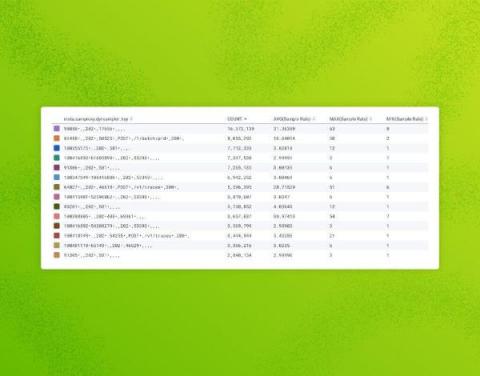
Refinery, Honeycomb’s tail-based dynamic sampling proxy, often makes sampling feel like magic. This applies especially to dynamic sampling, because it ensures that interesting and unique traffic is kept, while tossing out nearly-identical “boring” traffic. But like any sufficiently advanced technology, it can feel a bit counterintuitive to wield correctly, at first. On Honeycomb’s Customer Architect team, we’re often asked to assist customers with their Refinery clusters.
Hey.NET engineers! Today, we’ll explore the world of OpenTelemetry, focusing on how it can benefit your.NET applications. We’ll talk about the strengths and weaknesses of OpenTelemetry, walk you through the setup process, discuss the basics, and share some best practices. Plus, we’ll touch on topics like auto-instrumentation, metrics, and more. So, let’s dive in!
As version 4.0.4, we are excited to announce the capability of Cribl’s webhook to write to any destinations and APIs that requires OAuth including Microsoft Sentinel. Cribl has long supported OAuth in many destinations through native integrations but with the enhanced Webhook we can now write to any destination that require OAuth authentication.
Continuous Integration/Continuous Delivery (CI/CD) has now become the de-facto standard for all engineering teams seeking to keep pace with the demands of the modern economy. At Coralogix, we operate some of the most advanced build and deploy pipelines in the world. We’ve baked that knowledge into our platform with a CI/CD Observability feature called Coralogix Tagging.
Metrics, Logs and Traces are often referred to as The Three Pillars of “Observability“. The term observability has been used in control theory to refer to how the state of a system can be inferred from the system’s external outputs. Applied to IT, observability is how the current state of an application can be assessed based on the data it generates. Applications and the IT components they use provide outputs in the form of metrics, events, logs and traces (MELT).