Installing and Activating SquaredUp Azure Edition
In this video, we’ll be covering how to deploy SquaredUp Azure Edition from the Azure Marketplace, or how to Manually Deploy on an existing server, for the first time, and how to activate.


The latest News and Information on Monitoring for Websites, Applications, APIs, Infrastructure, and other technologies.
Developers work tirelessly to publish updates to improve their products and services because, as we all know, a better user experience = happier customers. While shipping updates, features, and improved capabilities can help improve your user’s experience, introducing new code can also introduce new issues; and finding exactly what update caused a release to degrade can be time consuming and costly.
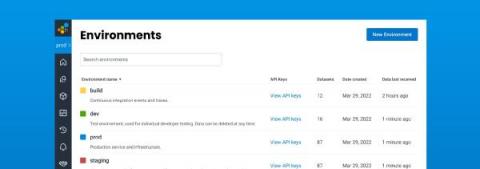
We’ve made some big changes under the hood at Honeycomb to give you better control over how you put your apps data to work—we’ve expanded our core data model with formal Environments and Services! In short, the best observability (o11y) platform in town just got better! Before we dig in, an important note. Existing Honeycomb teams are not impacted by this update. If you’re already a Honeycomb user, congratulations! Your team is now a Honeycomb Classic team.
Has this ever happened to you: ‘I have too many agents to help me collect data for processing into separate SIEMs. It’s a pain to make any changes to their configuration!’ Or perhaps this one: ‘I have a large kubernetes deployment, but I just can’t seem to get metrics and logs out of it and into my SIEM or TSDB!’ Fear not, weary administrators, Cribl Edge is here!
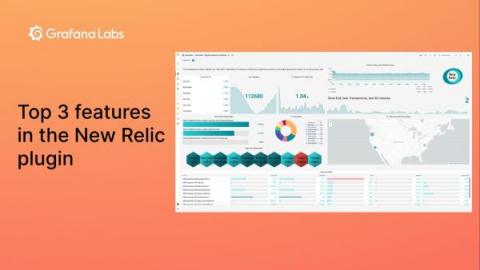
Grafana Labs and New Relic have a long history of working together to drive cross-functionality so joint customers can benefit from using Grafana and New Relic together. The New Relic data source plugin for Grafana — which is available to users with a Grafana Cloud account or with a Grafana Enterprise license — is no exception. In this quick tutorial video, we’ll not only show you how easy it is to configure the New Relic data source plugin in Grafana.
The world is moving towards a data-driven society, resulting in businesses gathering more data to leverage for profit. This data is either in structured forms like JSON/CSV/XML or unstructured forms like text written on a notepad or typed texts. Regardless of the data’s formatting, the important thing is the information it contains. Various tools in the market extract data from different agents and platforms that will improve your metric monitoring system.
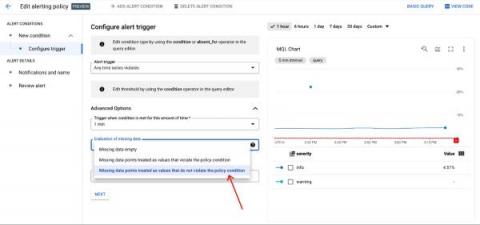
When you are dealing with a situation that fires a bevy of alerts, do you instinctively know which alerts are the most pressing? Severity levels are an important concept in alerting to aid you and your team in properly assessing which notifications should be prioritized. You can use these levels to focus on the issues deemed most critical for your operations and triage through the noise.
Containers are no longer a thing of the future – they are all around us. Companies use them to run everything – from the simplest scripts to large applications. You create a container and run the same thing locally, in the test environment, in QA, and finally in production. A stateless box built with minimal requirements and unlike virtual machines – without the need of virtualizing the whole operating system.