Operations | Monitoring | ITSM | DevOps | Cloud

The latest News and Information on Monitoring for Websites, Applications, APIs, Infrastructure, and other technologies.

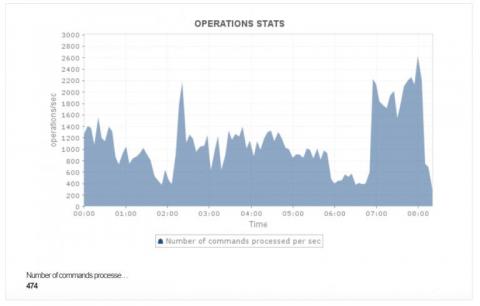
Redis monitoring 101: Metrics to watch

Redis, which stands for Remote Dictionary Server, is an open source, in-memory data structure store that’s used as a database, memory cache, and message broker. It stores data entirely in memory in the form of key-value pairs. This gives it an edge over all other databases, as it eliminates the need to access data from the disk. It also makes Redis one of the fastest NoSQL databases, where data is accessed in microseconds because there are no seek time delays.
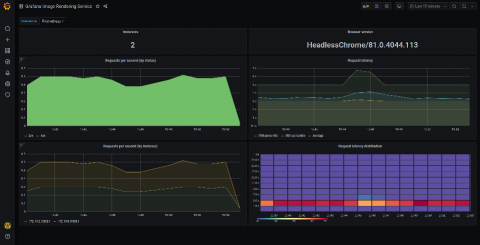

Grafana 7.0 preview: New image renderer plugin to replace PhantomJS

Many Grafana users export images of their dashboard panels. This feature powers the ability to receive alerts with a rendered image of the panel attached, which is valuable for quickly spotting if something is about to go sideways in production. Since Grafana v2.0, when support for server-side rendering of dashboard panels as images was introduced, PhantomJS has served as the built-in image renderer that enables this feature.

Sysdig's Prometheus monitoring behind the scenes

A few weeks ago, we announced that Sysdig is offering fully compatible Prometheus monitoring at scale for our customers, as well as a new website called PromCat.io hosting a curated repository of Prometheus exporters, dashboards and alerts. This got me thinking about how we were actually able to implement the changes necessary to offer this in our platform.

Ruby Garbage Collection: More Exciting than it Sounds

Running software uses computer memory for data structures and executable operations. How this memory is accessed and managed depends on the operating system and the programming language. Many modern programming languages manage memory for you, and Ruby is no different. Ruby manages memory usage using a garbage collector (also called gc). In this post, we’ll examine what you, a Ruby developer, need to know about Ruby’s gc. Use the links below to skip ahead in the tutorial.

Cloud to Cloud, Easily Integrate Cloud Monitoring Tools in a Time of Remote Work

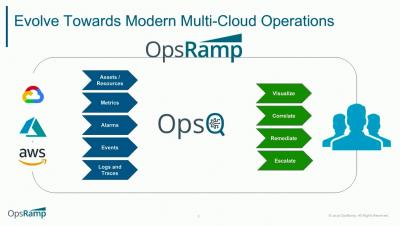
OpsRamp can ingest, process, and analyze events from third-party tools and automatically create new managed resources for alerts ingested from other monitoring tools. Automatic resource creation ensures rapid root cause analysis for third-party resources with relevant context. Application owners can also tag external resources to service maps so that they can drill-down and troubleshoot the supporting hybrid infrastructure for the associated business-critical service.

Top 3 Network Performance Monitoring Use Cases for SPs & MSPs | Obkio

You may have heard IT professionals go on about the importance of monitoring your network performance to help you pinpoint the cause of problems like dropped calls, slow downs, or connection losses within your infrastructure. The easiest way to get the point across is to understand the specific situations in which the solution will be used. Watch this 2-minute video to learn about the top 3 use cases for network performance monitoring, specifically for service providers (MSPs).

Introducing ipl/Sql - OOP SQL abstraction for PHP

During the past few months while working on Icinga DB, we have tested our existing libraries on how we work with data and how we present them programmatically. Maybe it was because we were doing something new with Icinga DB or we weren’t entirely happy with the existing code. In any case, it was time for new libraries :-). The IPL – Icinga PHP Library was born. And we want to share that work starting with ipl/Sql an OOP SQL abstraction for PHP.

Centralize monitoring with our Metaconsole

Gradually, brick by brick, we will get the necessary toolkit to build a company and maintain it. If on previous occasions we have emphasized the importance of monitoring a company’s IT systems, today we will review what it is and what advantages we when we centralize monitoring. The goal is pretty simple: we want to have maximum control over the IT of a company moving unbridled to the summit.

Patching Operating Systems While Working from Home

IT leaders need a well-defined strategy for managing patches and upgrades for software applications and technologies. Planned patch management rollouts help combat security vulnerabilities as unpatched systems are highly vulnerable to data breaches and attacks from hackers. During Covid-19, IT organizations have struggled to keep systems updated using remote teams, especially as software vendors have recently released a record number of patch fixes and upgrades.