Operations | Monitoring | ITSM | DevOps | Cloud

The latest News and Information on Monitoring for Websites, Applications, APIs, Infrastructure, and other technologies.

Reducing alert fatigue with GoAlert, Target's on-call scheduling and notification platform

At Sensu Summit 2019, Adam Westman, Sr. Engineering Manager at Target, introduced us to GoAlert, their on-call scheduling and notification open source project. In this post, I’ll recap his talk, sharing the journey that led them to build GoAlert, the problems they’ve solved, and how they use GoAlert with Sensu Go to simplify monitoring and reduce alert fatigue.
Using GitHub Actions to Create Sentry Releases

At Sentry, we’re big fans of continuous integration and deployment. We’re also big fans of GitHub — and not just because we employ a number of notable GitHub alumni. We use our own GitHub integration to link issues, identify suspect commits that likely introduced new errors, and suggest assignees who can best resolve each issue. Last month, GitHub released GitHub Actions for general availability.

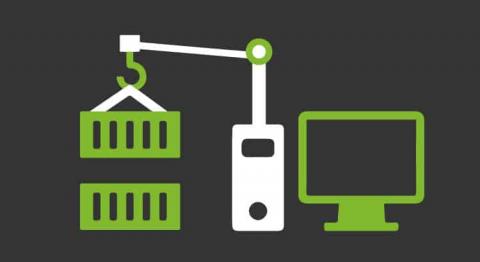
Create your own Docker containers to test and deploy applications

If you are a developer, a systems administrator, you work in the information technology sector or you are simply a technology enthusiast who has ever deployed some type of application, surely you will have faced the same problem we all ran into. If you are thinking of dependencies, bingo!

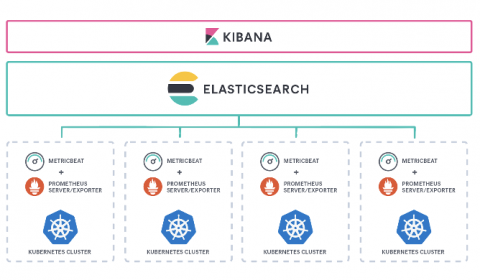
Prometheus monitoring at scale with the Elastic Stack

Tools. As engineers we all love great tools that help our teams work productively, resolve problems faster, be better. But tools can tend to grow in number, require additional maintenance, and most importantly, create silos. Each team has certain responsibilities and is constantly searching for tools that can address specific requirements in the best possible way.

Monitor systemd with Datadog

Systemd is an initialization program that manages processes on Linux systems. It was designed to improve the performance of its predecessors by creating a dependency tree of system components, initializing them only when needed, and using as much parallelization as possible. With systemd becoming ubiquitous in Linux distributions, it’s crucial that you monitor the health and performance of both systemd and the components that it manages.