Operations | Monitoring | ITSM | DevOps | Cloud


The latest News and Information on Observabilty for complex systems and related technologies.
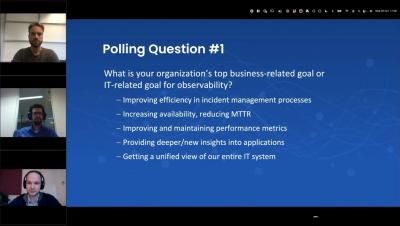

Watch Grafana Labs CEO, Co-founder Raj Dutt discuss why companies need observability
Grafana Labs CEO and Co-founder Raj Dutt sat down with “NYSE Floor Talk” ahead of ObservabilityCON to discuss why companies are increasingly focused on observability as a means to improve customer satisfaction. In his conversation with Judy Khan Shaw, host of “NYSE Floor Talk,” Dutt also talked about Grafana Labs’ big tent philosophy and the growth of Grafana Labs and the Grafana open source community.
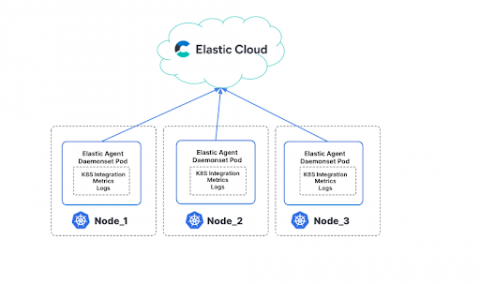
Managing your Kubernetes cluster with Elastic Observability
As an operations engineer (SRE, IT manager, DevOps), you’re always struggling with how to manage technology and data sprawl. Kubernetes is becoming increasingly pervasive and a majority of these deployments will be in Amazon Elastic Kubernetes Service (EKS), Google Kubernetes Engine (GKE), or Azure Kubernetes Service (AKS). Some of you may be on a single cloud while others will have the added burden of managing clusters on multiple Kubernetes cloud services.

The Benefits of Data Observability to SMBs and How to Unlock Them
Data observability is a relatively new discipline in the fields of data engineering and data management. While many are familiar with the longstanding concepts of observability and monitoring in enterprise IT networks and infrastructure, data observability has only really come into the spotlight in the last two years. However, it has managed to turn a lot of heads in that short time.
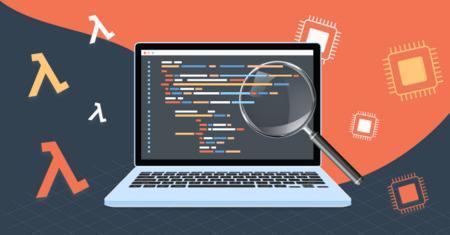
Observing AWS Lambda IOT devices
The internet of things is one of my favorite topics. IOT enables low-powered connected devices that opens gateways from the digital to the real world. While I love tinkering away with an Arduino sketch and the latest Espressif or Arduino board, there is always an air of frustration when trying to build out what at first seems like simple functionality using one of these “smart devices” because of the limited view we have into their operations.

On Building a Platform Team
It may surprise you to hear, but Honeycomb doesn’t currently have a platform team. We have a platform org, and my title is Director of Platform Engineering. We have engineers doing platform work. And, we even have an SRE team and a core services team. But a platform team? Nope. I’ve been thinking about what it might mean to build a platform team up from scratch—a situation some of you may also be in—and it led me to asking crucial questions. What should such a team own?
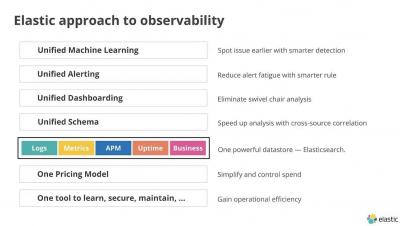
Elastic Observability: What is it, and How Do You Get Started?
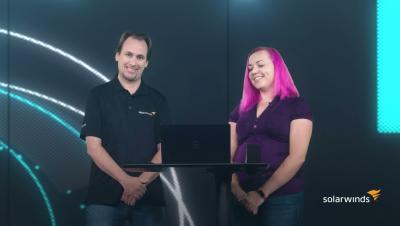
A Demonstration of Hybrid Cloud Observability | SolarWinds Day Virtual Showcase (Oct 22)
A Demonstration of Hybrid Cloud Observability | SolarWinds Day Virtual Showcase (Oct 22)
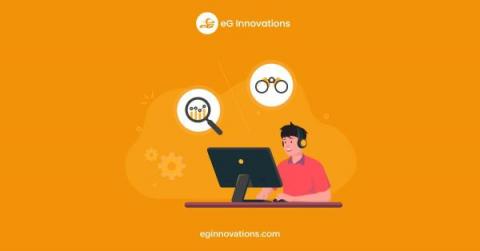
Observability vs. Monitoring: What is the Difference?
For several decades, IT monitoring has been deployed in different forms. The focus of IT monitoring has been to gather metrics about the operations of an IT infrastructure’s hardware and software assets to ensure that all the key functions are being performed as expected to support applications and IT services. In the recent past, the term Observability has been used as a synonym for “modern monitoring”.