The latest News and Information on CyberSecurity for Applications, Services and Infrastructure, and related technologies.
There is always something new on the horizon when it comes to technology. Isn’t it human nature to want to wait for the next 'new' model car, the next 'bigger' TV or the next 'faster' smart phone? The newest release might be more appealing – especially to higher-ups, who want the latest and greatest trending technology. But there are hidden risks associated with waiting to implement a new tool or solution.
Reliable SSL monitoring is crucial to every website and online service. Without it, you can lose customers, profits, and even your position in search engine rankings. But which SSL certificate monitoring is the best?
Coding is a big part of building an application. But, most of the time, you don’t write the entire code. Yes, you don't! Some people, usually big companies, provide pre-written codes for certain standard functions - like loggers, APIs, etc. This is because these functions work the same way in most applications; they require only simple fine-tuning to be adapted for your program as well. In such a case, writing it all from scratch would be a waste. And that is why developers use libraries.
At Canonical, we often get questions about open-source security and of course, Linux security is a common topic. Based on a recent webinar hosted by our security team and an accompanying blog post, we put together the most common questions we receive. This is by no means an exhaustive list, but it should give you a general idea about Ubuntu’s approach to security vulnerability management, livepatch, IoT, and its compliance and hardening tools.
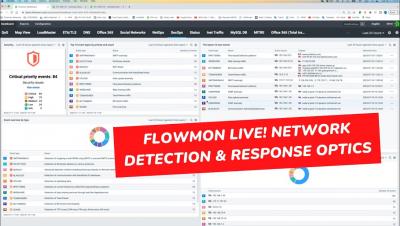
The risk from insider threats has grown massively, with perpetrators frequently getting around organizations' increasingly complex perimeter protections. It is one of the most common ways customer data or industrial and trade secrets leak. This very complex topic includes many types of threats and techniques. Let's discuss how you could detect insider threat activity at a network level.
Kubernetes Secrets are a built-in resource type that's used to store sensitive data. This blog teaches you how to work with Secrets in Kubernetes. Kubernetes can do many things, but we usually refer to it as a “container orchestrator.” Orchestrating containers means starting and restarting them when needed, ensuring their configuration matches the declared state, and autoscaling them. But Kubernetes can do much more than that.