Operations | Monitoring | ITSM | DevOps | Cloud

The latest News and Information on CyberSecurity for Applications, Services and Infrastructure, and related technologies.

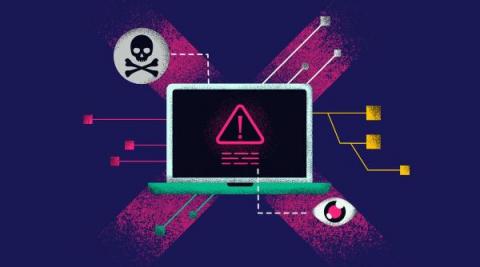
Demystifying the Hype Around XDR

Extended Detection and Response (XDR) has generated a lot of buzz recently with press, analysts, and even customers. There’s no denying that, at face value, its promise of reduced complexity and cost while increasing detection and response is alluring. As security teams look to modernize their security tooling, they’re also looking for solutions to some of their largest challenges. Is XDR the answer? What is XDR, exactly, and how do you determine if it’s right for your organization?

The Top 14 Free and Open Source SIEM Tools For 2021

Security Information and Event Management (SIEM) is a combination of Security Information Management (SIM) and Security Event Management (SEM). A SIEM solution provides real-time analysis of security alerts generated by applications and networks. SIM is the collection, monitoring and analysis of security-related data such as log files into a central repository for trend analysis.

Accelerate Hybrid Threat Protection Using Sumo Logic Cloud SIEM powered by AWS

It has been off to the races for the Sumo Logic and AWS teams since the general availability of the Sumo Logic Cloud SIEM powered by AWS solution on June 1, 2021. We are excited for the overwhelming response from customers from across all segments, industries and geographies.

ManageEngine recognized in 2021 Gartner Magic Quadrant for Security Information and Event Management for the fifth time!

Today, we’re excited to announce that ManageEngine has been recognized in 2021 Gartner Magic Quadrant for security information and event management (SIEM) for the fifth consecutive time. We are thrilled to be awarded this recognition yet again for our contribution to the world of cybersecurity. “Most enterprises were not prepared for the widespread changes in work environments following the COVID-19 pandemic.

How and Why Has Cloud Computing Surged During the Last Few Years?

Cloud computing is undergoing a surge in adoption. In 2020, more money was spent on cloud computing than on-site data centers - a huge milestone. Increasingly, computing and storage are being routed off-site. How and why is this transition taking place? This article takes a quick look at some of the factors driving this watershed moment.

Measure your DevSecOps maturity with Datadog's self-assessment

With DevOps teams moving at ever greater speed, it’s vital for security teams to be deeply involved at all stages of the software development and delivery lifecycle. Breaking down silos between development, operations, and security teams ensures that security considerations are not overlooked, that vulnerabilities are caught early, and that security checkpoints do not slow down the delivery process.

Enabling Single Sign-On with SQL Monitor

It’s never been more critical to protect your data infrastructure against malicious actors, with organizations dealing with an ever-expanding number of increasingly sophisticated attacks. Monitoring solutions represent part of your infrastructure’s attack surface area – they enjoy highly privileged access to the systems they help manage, and store sensitive information about the workloads running on them.

How you can harden your N-central server

My colleague Lewis Pope, our head security herd, wrote an excellent blog last week about hardening N-able™ RMM. I thought it prudent, in light of recent developments, to do the same for the N-able N-central® product. A lot of it is common knowledge, but I wanted to put together a checklist so you can review the security of your N-central platform and ensure you’re meeting some of these best practices.

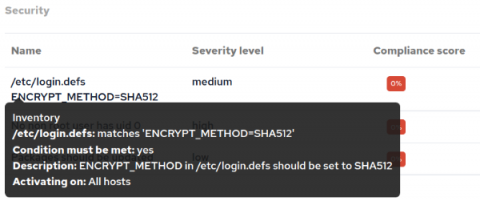
Introducing Datadog Cloud Security Posture Management

Governance, risk, and compliance (GRC) are major inhibitors for organizations moving to the cloud—and for good reason. Cloud environments are complex, and even a single misconfigured security group can result in a serious data breach. In fact, misconfigurations were the leading cause of cloud security breaches in 2020. This puts a lot of pressure on developer and operations teams to properly secure their services and maintain regulatory compliance.