More and more, companies from small businesses to global enterprises are migrating or deploying workloads in public cloud environments. Typically, their goal is cost optimization, as public clouds can dramatically reduce on-premises infrastructure costs and corresponding maintenance labor costs. Instead of installing more servers, storage, and networking components in your own datacenter, public cloud environments allow you to deploy dynamic cloud resources, usually with a short to medium lifespan.
The SolarWinds exploits have been widely reported, fully covered, and basically as we would say in Aussie – Done to Death Mate. But some of the info got me thinking, especially this article from my buddies at Microsoft which gives some great background and flows for that how the attacks were actually working. I’ve been working with Ivanti Application Control – formerly AppSense Application Manager for over 17 years.
One of the best parts of our job is enabling you to become the best #ITPerformanceHero that you can be. But behind the scenes, eG Innovations is filled with talented team members who wear their own IT Hero capes. We want to take some time to introduce you to a few of them, who make eG Innovations the leading performance monitoring company in the market. We’re pleased to introduce Babu Sundaram, Head of Product Engineering at eG Innovations.
Many companies have adopted a multi-cloud environment for their services and many more plan to expand cloud usage in the future. As more VMs and workloads transition to public and private clouds, it is becoming clear that multi-cloud is becoming a standard or benchmark rather than something optional that businesses want to ‘try out’.
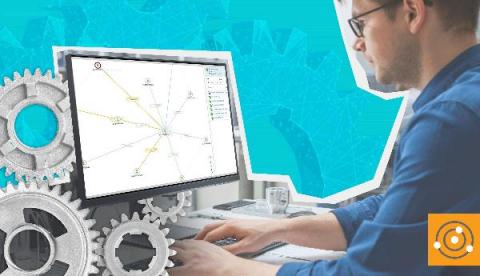
Once upon a time there was a small company in the south west of Germany that used an old check plugin for monitoring its network devices. But as their network got bigger and bigger over time, the plugin (written in Perl) became more greedy than ever before and swallowed all of the available resources. The CPUs were melting and the RAM was about to collapse. So a small team of creative software developers decided to take the fate of their company into their own hands.