Operations | Monitoring | ITSM | DevOps | Cloud

How Git Worktrees Changed My Development Workflow

Since I started using Claude Code more frequently, I kept noticing a “worktree” checkbox popping up whenever I started a session in a Git repository. I had no idea what it meant, so I did what any curious developer would do and started digging. What I found was a Git feature I somehow never came across before: git worktrees.

Multi-Agent Architectures - What we shipped, what broke, and what we'd do differently

At LLMday Lisbon, our Software Engineer, Viktor Vasylkovskyi, highlights the realities of building production AI agents with LangGraph - sometimes getting it right, often learning the hard way. This talk is about what was actually shipped, including a distributed multi-agent setup at PagerDuty. Viktor breaks down the real tradeoffs between LLM-driven and deterministic orchestration, what broke, and how he’d approach it differently now.

Europe's Heatwave Is a Real-Time Stress Test for Data Center Infrastructure

Europe is in the middle of one of its most severe heat events on record, and the effects go well beyond public health. As temperatures across France, Spain, the UK, and Germany push into record territory, the strain on power grids, cooling systems, and physical infrastructure is becoming impossible to ignore. For data center operators, maintaining uptime in this environment demands the real-time visibility that modern Data Center Infrastructure Management (DCIM) software can provide.

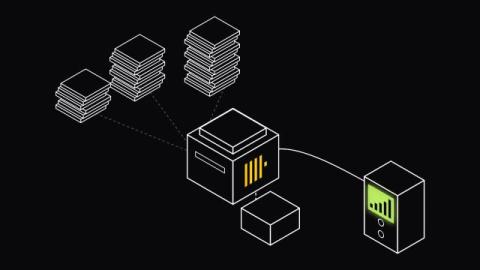
Telegraf Enterprise Now Generally Available: Manage Telegraf Fleets at Scale

Telegraf Enterprise is now generally available. It combines Telegraf Controller, a centralized management console for Telegraf, with official support from InfluxData. Open source Telegraf remains unchanged. Telegraf Controller is free to start with built-in limits, while a Telegraf Enterprise license unlocks higher-scale limits, audit logging, LDAP/OIDC integration, and commercial support. Telegraf has become the standard for collecting telemetry across cloud, edge, and physical infrastructure.

Bitbucket Packages adds PyPI and NuGet support

If your team bIf your team builds with Python or.NET, your packages have likely lived separately from your code, stored in a registry with distinct login, permissions, and billing. Starting today, they don’t have to. Bitbucket Packages now supports the Python Package Index (PyPI) and NuGet, integrating Python and.NET package management into the platform where your team writes code, reviews pull requests, and runs pipelines.

Trace packages back to their source pipeline

When we introduced native Pipelines authentication for Bitbucket Packages, we made it easier to publish artifacts from CI/CD without relying on personal credentials. Now we’re extending that integration further: package artifacts published through the Pipelines integration can display a Source Pipeline, making it easy to trace an artifact back to the pipeline run that created it.

Introducing Package triggers in Bitbucket Pipelines

In November 2025, we introduced new triggers and workflows to Bitbucket Pipelines to help teams manage and scale complex CI/CD workflows. We later extended that foundation with additional event-based triggers for pipeline, deployment, and pull request events. We’re now extending that model with a new package-artifact-created trigger.