Operations | Monitoring | ITSM | DevOps | Cloud

Who Is Actually Qualified to Oversee AI

Who should actually be trusted to oversee AI? As frontier AI systems become more powerful, the question isn't just whether we need more oversight — it's who is actually qualified to provide it. Adam Arellano, Martin Reynolds, and Bryan D. Payne debate whether governments, third-party evaluators, academics, former frontier-lab employees, or independent organizations can realistically hold companies like OpenAI and Anthropic accountable.

Introducing Selector Foundry: Agentic NetOps

Network operations teams have heard plenty about AI this year. Most of it answers the alert in front of it, then hands the rest of the incident back to an engineer. Someone still has to correlate the evidence, find the cause, prepare the fix, and prove it held. This week, we announced Selector Foundry, the agentic NetOps solution built into the Selector platform. Foundry adds a team of specialized AI agents on top of the full-stack observability and AIOps foundation our customers already run.

From SOCI Compliance to Continuous Infrastructure: How Puppet Helps Protect Critical Infrastructure

Australia’s critical infrastructure landscape has changed significantly. The Security of Critical Infrastructure Act 2018 (SOCI Act) has evolved from a framework focused primarily on identifying critical assets and reporting incidents into a broader risk-management and operational-resilience regime. The 2024 reforms reinforced that direction, increasing the focus on the systems, data, and technology dependencies that underpin Australia’s essential services.

Transaction Check Basics in less than 3 minutes

In this video, we explore the basics of Transaction Checks on Uptime.com, an advanced multi-step monitoring tool for website elements. Learn how to create customized scripts to mimic user actions such as visiting a site, filling out forms, and clicking buttons. We walk through a step-by-step guide on setting up a Transaction Check to monitor a login process, including navigating to a URL, validating HTTP status codes, and using browser developer tools to configure field entries. Discover different monitoring intervals and tips for organizing your checks with tags and location settings.

The Human Side of Innovation: Sheetal Kalra on Trust, Simplicity, and SolarWinds in Africa

"Channel is the heartbeat of any vendor conversation...if your product is not good, the channel is not going to be doing the miracle." In this episode of SolarWinds World Tour Conversations, we sit down with Sheetal Kalra, Regional Channel Manager for META, to discuss why a strong channel ecosystem is essential for bringing in strong customers. We explore the technology-driven nature of channel sales, the 2026 modifications to simplify the Partner Program, and how partners are successfully navigating network and observability challenges for their clients.

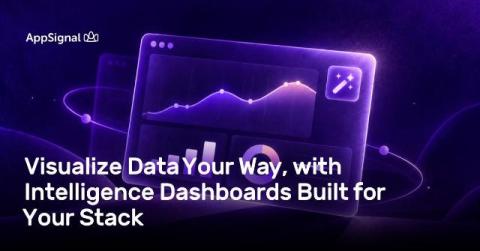
Visualize Data Your Way, with Intelligence Dashboards Built for Your Stack

When something goes wrong in production, you do not want to spend the first five minutes rearranging charts. You want the error rate, throughput, queue depth, memory, and view metrics that show when customers are having issues while using your app.

What if your agent's hallucinations had a budget? How to start using SLOs for agent behavior

At Grafana Labs, observability is what we do. So as we started building AI agents, we naturally reached for the same instincts we bring to every system: measure it, set targets, and make reliability something you can reason about instead of hope for. That instinct led us somewhere unexpectedly useful. It turns out one of the oldest ideas in reliability engineering, the error budget, maps beautifully onto one of the newest problems in software: how do you know if an AI agent is actually any good?

You made coding faster. Guess where the bottleneck went next.

Somewhere in the last year, your team's code output went up. Pull requests are opened faster. The backlog of small fixes and routine changes started clearing quicker than it used to. If delivery still feels roughly as slow as it did before, that's what happens when you speed up one part of a process without touching anything downstream of it.