April was packed with updates, and we’ve got plenty to share! You may have noticed numerous enhancements to StatusGator throughout the month. Let’s take a moment to recap what’s new.
The new partnership between Progress and Veeam represents a significant step forward in cybersecurity. It marks a considerable advancement in data protection by merging the Flowmon AI-powered threat detection capabilities with the robust backup solution of Veeam. This empowers organizations to more effectively defend their invaluable digital assets.
Figuring out how to represent your as-built environment in PagerDuty can be confusing for new users. There are a lot of components to PagerDuty that will help your team be successful managing incidents, integrating with other systems in your environment, running workflows, and using automation. Your organization might have a lot of these components – users, teams, services, integrations, orchestrations, etc.
In an earlier blog, we looked at slow dependencies and how they can impact the reliability of other services. While we explored what happens when dependencies are degraded, what happens when dependencies outright fail? What can you do when your application or service sends a request to another service, and nothing comes back? We’ll answer this question by using Gremlin to proactively test a service with multiple dependencies.
Marketing plays a pivotal role in helping to drive MSP growth and success. Yet, this is something that many MSPs can struggle with and too often find themselves grappling with common marketing mistakes that can hinder their ability to attract and retain clients. From overlooking the importance of a cohesive brand identity to neglecting the power of data-driven decision-making, these are just some of the things that can prove detrimental to an MSP’s bottom line.
In a world where data carries such huge importance, safeguarding sensitive information is critical for all organizations. In our current landscape, where cyber threats lurk around every corner, passwords serve as the frontline defense, shielding both MSPs and their customers from potential breaches and data compromises. World Password Day, is the perfect opportunity for MSPs emphasize the importance of robust password management to their customers.
Not that long ago, in a galaxy that isn’t remotely far away, a disturbance in the open source world was felt with wide-ranging reverberations. Imagine waking up one morning to find out that your beloved open source tool, which lies at the heart of your system, is being relicensed. What does it mean? Can you still use it as before? Could the new license be infectious and require you to open source your own business logic? This doom’s day nightmare scenario isn’t hypothetical.
Building a small business website requires careful planning and execution. This article will guide you through the essential steps to make a website that achieves your business goals and engages your target audience. We'll cover key aspects such as defining your website's purpose, optimizing for mobile devices, improving findability and navigation, and measuring your site's performance.
This blog post explores Cribl.Cloud‘s approach to Identity Governance (IG), a crucial strategy for securing access to critical systems and data. Learn how Cribl.Cloud leverages IG to ensure security, compliance, efficiency, and customer trust, while also tackling the challenges of managing custom SaaS APIs within an IG framework.
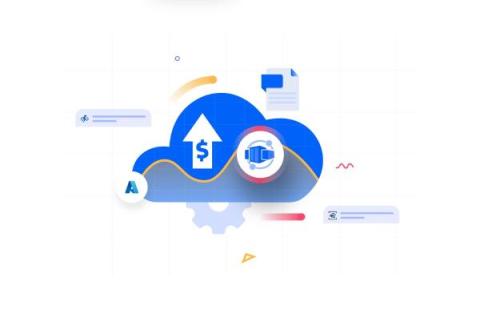
Since containers revolutionized resources utilization and their cost by significantly increasing VM densities, understanding Azure Container Instance Pricing is key for making informed decisions about your containerized apps. ACI is the serverless option within Azure, to provision additional compute for demanding and highly scalable workloads. Knowing the ACI pricing, you can optimize costs while efficiently deploying your containers in a managed service that will optimize your operations.