Customer Insights: The journey to Open Telemetry
Learn how global software leader SAP leverages Sumo Logic’s observability solutions on its journey to Open Telemetry.


Canonical is committed to enabling Ubuntu users to leverage the strong run-time confidentiality and integrity guarantees that confidential computing provides. That is why we are happy to announce we have joined the confidential computing consortium, a project community at the Linux Foundation that is focused on accelerating the adoption of confidential computing and driving cross-industry collaboration around relevant open source software, standards and tools.
What would you be doing right now if the Internet didn't exist? The world wide web as we know it is only a few decades old, but it's hard to imagine life without it. I fondly recall the early days of the "personal" Internet, when I used a 56k modem and waited anxiously for that oh-so-familiar connecting sound to access my AOL account and check if I had mail. We've come a long way from those humble beginnings.
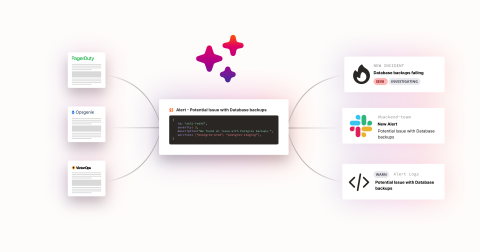
Shouldn’t your alerts be doing more of the work for you? A noisy channel with every alert from hundreds of monitors and microservices is a chaotic place to actually find the incidents that are impacting your customers. And it still requires a heck of a lot of human intervention. We think it’s time for something better. Today we’re releasing Alert Routing: the next phase of worry-free automation from FireHydrant.
When containers and container orchestration were introduced, they opened the possibility of helping companies utilize physical resources like CPU and memory more efficiently. But as more companies and bigger enterprises have adopted Kubernetes, FinOps professionals may wonder why their cloud bills haven’t gone down—or worse, why they have increased.
One-click dashboard templates are among a number of tools available within eG Enterprise to allow organizations to rapidly set up targeted and bespoke views for a wide range of audiences across their organizations, whilst avoid the costs and inconsistencies of building and maintaining many individual dashboards.