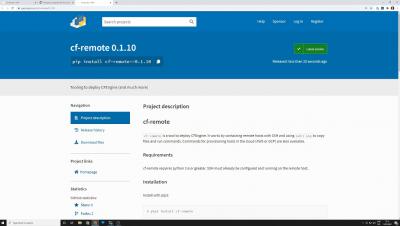
Using GitHub Actions to publish releases to pip/pypi (Developer demo)
This video demonstrates how easy it is to make new releases of a python package on GitHub, and publish it to pypi.org.


At LogicMonitor, we deal primarily with large quantities of time series data. Our backend infrastructure processes billions of metrics, events, and configurations daily. In previous blogs, we discussed our transition from monolith to microservice. We also explained why we chose Quarkus as our microservices framework for our Java-based microservices. In this blog we will cover.
For those of you who aren’t familiar with AWS CodePipeline, it’s a continuous integration and continuous delivery (CI/CD) framework that enables application development teams to deliver code updates more frequently and reliably. You may have also heard it being called a CI/CD or DevOps pipeline. These pipelines have always traditionally been used to deploy the components of a certain application whenever new code in “checked-in”.
Zero Trust security. Some would say it’s the latest and greatest buzzword and this disposition is understandable given the amount of jargon introduced into the Information Technology market each year. With vernacular being used interchangeably like “AI,” “Machine Learning,” and “Deep Learning,” these words get stripped of their real significance.
As an important part of the security ecosystem, Identity Management shields organizations against cyberattacks. In 2018 and 2019, Osterman Research published important findings indicating hackers’ increased preferences to target employees with social engineering being one of their preferred methods. But identity governance is not an easy task.
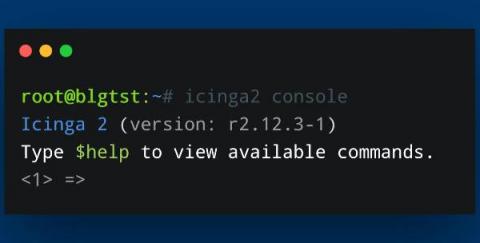
Today I will show you a couple of small functions you can use with the Icinga Console. Using the Icinga Console can help with scripting in general and provides a quick and easy-to-use way of extracting information from your Icinga environment. We will take a look at extracting information belonging to the service objects in Icinga. Obviously, you can pinpoint different objects, like host objects, with which you can work via the Icinga 2 API and Console.