Should all incidents be treated the same? Seems like a simple question, but the answer can have big implications. Think about an employee who contacts the service desk, complaining they can’t log onto their email. If the issue is due to a ‘stale’ password, dropped connection or configuration issue after an update for the email server, then the impact on the organization can be quantified to the lost productivity for the impacted employee or employees.
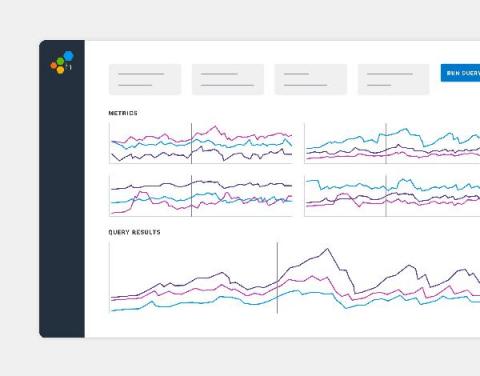
Starting today, Honeycomb Metrics is now generally available to all Enterprise customers. You’ve adopted our event-based observability practices, in part to overcome the debugging roadblocks you hit when using custom metrics to identify application issues. But metrics do still provide value at the systems level. Now, you can easily see and use your metrics data alongside your event data in Honeycomb—all in one interface.
Open Telemetry represents an effort to combine distributed tracing, metrics and logging into a single set of system components and language-specific libraries. Recently, OpenTelemetry became a CNCF incubating project, but it already enjoys quite a significant community and vendor support. OpenTelemetry defines itself as “an observability framework for cloud-native software”, although it should be able to cover more than what we know as “cloud-native software”.
Cyberthreats including malware, viruses, and other security hazards are constantly evolving and becoming more dangerous and harder to detect. This makes it quite difficult to keep your data and information protected nowadays. Unless you are sure that you are absolutely protected, which is wishful thinking, you remain at risk of attacks by the latest strains of malware and security threats.
GigaOm’s latest Radar for AIOps solutions has just been released and it makes for compelling reading for anyone trying to maximize organizational performance in our digital world. Particularly if you’re down with DevOps.
In order to produce their masterpieces, artists like van Gough, Rembrandt, Picasso, and Monet painted with more than just one color. Being able to choose from multiple colors (not to mention an abundance of talent, inspiration, and creativity) is what allowed these artists to see their complete vision come to life on canvas. However, if you’re relying on a single set of data to troubleshoot network issues, it’s like you’re stuck painting with one color.
For the newest instalment in our series of interviews asking leading technology specialists about their achievements in their field, we’ve welcomed Dan Izydorek, Founder of PC Miracles. Dan is a cybersecurity specialist who has recently spoken on Fox news on this subject.
If you were to put 100 enterprise tech leaders in a room together and ask them if they think their company’s employee experience is dependent upon IT, I’m certain all would agree it is. But I’m also certain those 100 wouldn’t know: For IT decision-makers, the devil is in the details. Many are judged by uncompromising Service Level Agreements (SLAs) and shoddy survey data, not comprehensive digital experience trends and indexes.
KVM (Kernel-based Virtual Machine) is the leading open source virtualisation technology for Linux. It installs natively on all Linux distributions and turns underlying physical servers into hypervisors so that they can host multiple, isolated virtual machines (VMs). KVM comes with no licenses, type-1 hypervisor capabilities and a variety of performance extensions which makes it an ideal candidate for virtualisation and cloud infrastructure implementation.