In this three part blog series, John Appleby sits down with Nick Miletich, CTO at Managecore, to discuss how building a next generation managed service firm had to include automation at the helm.
Working with technology means dealing with incidents or outages from time-to-time, so staying on top of problems is essential. Back in the spring of 2022, Clearco, the world’s largest e-commerce investor, had an alerting system set up to catch issues, except they had one problem: Clearco’s Customer Success team would learn of a problem before a notification even went off.
For DX Unified Infrastructure Management (DX UIM) customers, upgrading to the latest release has significant benefits – and that’s especially true with the latest version, release 20.4 cumulative update 6 (DX UIM 20.4 CU6). It offers a significant number of enhancements and new capabilities. DX UIM 20.4 CU6 provides teams with several advantages, including enhanced accessibility, improved operational efficiency, and richer insights.
For teams running secure web gateways (SWGs), also referred to as proxies, in today’s complex, dynamic network environments, extensive observability is a must have. Symantec offers a range of flexible deployment options for its SWGs, offering support for cloud, edge, and hybrid approaches. This blog explores a Broadcom solution that provides comprehensive observability for the Symantec edge offering, Symantec Edge SWG (formerly ProxySG).
The Bleemeo Community Edition is the Open Source and self hosted version of the Bleemeo monitoring solution. It is composed of three main components: And some third party components: In this article, we will show you how to install and configure these components to have a fully working monitoring infrastructure.
Nowadays, when most people think about the term “machine learning,” they think of advanced, refined applications such as Chat-GPT, the chatbot-based deep learning text generator, or AlphaGo, the computer program that’s currently the “world's best player” of the board game Go.
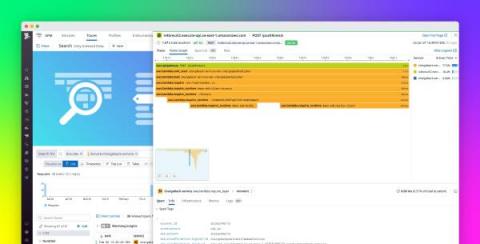
Serverless developers are undoubtedly familiar with the challenge of cold starts, which describe spikes in latency caused by new function containers being initialized in response to increasing traffic. Though cold starts are usually rare in production deployments, it’s still important to understand their causes and how to mitigate their impact on your workload.