Deploying an infrastructure in the cloud has become THE standard across the industry. According to O’Reilley Research, more than 90% of organizations are on the cloud or are using it in some capacity. As reported by Precedence Research, cloud deployment will surpass $1 trillion by the year 2028. But with the adoption of a new platform comes the need for tools and best practices to keep it up and running efficiently, which includes cloud-based monitoring.
Developing a proficient ITOps practice capable of handling unforeseen disruptions and mitigating negative business impact hinges on mastering optimal incident management. Beyond adhering to best practices and procedures, a critical aspect is making strategic investments in cutting-edge incident management software and tools. These tools empower your team by automating real-time monitoring and analysis, bolstering the resilience and capabilities of your IT system.
When exploring data, comparing individual data points with overall statistics for a large data set is often useful. For example, you might be interested in understanding when a performance metric rises above the historical average. Or possibly knowing when the variance of that metric increases past a certain threshold. Or maybe noting a change in the distinct number of IP addresses connecting to your public web portal.
Imagine a symphony where every musician plays their part flawlessly, but without a conductor to guide the orchestra, the result is just a discordant mess. Now apply that image to the modern IT landscape, where development and operations teams work with remarkable autonomy, each expertly playing their part. Agile methodologies and DevOps practices have empowered teams to build and manage their services independently, resulting in an environment that accelerates innovation and development.
Our CEO, Jad Jebara joins Digitalisation World podcast to provide insights as to how the data center industry, prompted by the requirement for meaningful environmental reporting, can work towards a truly sustainable future by focusing on the metrics that matter. See first-hand how modern DCIM software is being used to manage hybrid IT environments. Schedule a free one-on-one demo of Hyperview today.
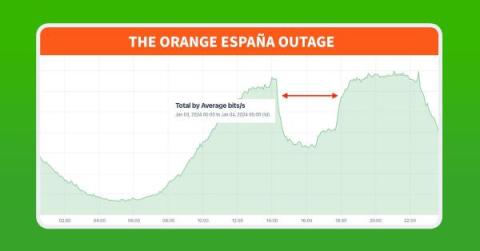
Orange España, Spain’s second largest mobile operator, suffered a major outage on January 3, 2024. The outage was unprecedented due to the use of RPKI, a mechanism designed to protect internet routing security, as a tool for denial of service. In this post, we dig into the outage and the unique manipulation of RPKI.